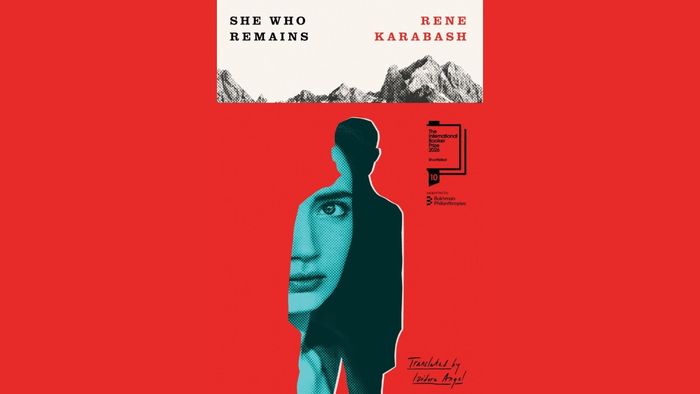
‘She Who Remains’ explores the tragedy of womanhood
Rene Karabash's novel follows Bekija as love and family collide under Albania's Kanun. Her transformation into Matija exposes the devastating pressures surrounding womanhood, identity and tradition.
- Nov 10, 2026,
- Updated Nov 10, 2026, 1:27 PM IST
I have never felt more silenced after reading a book and understandably so – Rene Karabash’s ‘She Who Remains’ leaves you with taut nerves.
The book, which (mind you) leans towards poetic narration, screams womanhood, and more than that, questions and lauds the courage to embrace that very concept.
Set in rural Albania, Karabash’s book is an ode to every woman there is – it is either an appeal or a glorification.
Now, even though ‘She Who Remains’ is a flourishing queer novel, I would rather describe it as a heartbreaking read where womanhood, love, family, tradition – everything is at stake. In fact, post-traumatic stress disorder could also be one of its central themes.
To give you the gist: the protagonist Bekija is torn between her desire to pursue a relationship with a woman she loves and her failure of nerve to decline marriage to a man. She is also deeply conflicted about her own identity, having been born a woman – a fact that has deeply affected her father and, in turn, shaped the way she sees herself. Here is where the story takes motion – Bekija renounces herself as a “sworn virgin” and transforms into Matija – a man.
The family is brutally subjugated under the ‘Kanun of Lekë Dukagjini’, with Bekija’s father having succumbed, body and soul, to the reigning vendetta. Later, Bekija’s decision to call off her wedding invites the Kanun’s wrath, eventually leading to the death of “most” (not just literally) of her entire family.
As the family feud takes effect – the to-be groom is expected to kill a family member of the guilty bride’s choosing – Bekija’s younger brother is chosen to die. Fortunately, he flees, eventually leading to the father’s killing. Good riddance, I would say, for that man was the biggest red flag, not just for the family but for womanhood itself. He wanted a son, and when he didn’t get one, he wanted his daughter to be one instead. She obliged, and it only led to destruction.
Following a series of letters from her brother, Bekija returns and is reunited with him and her long-lost lover, but things don’t quite work out her way. A bizarre discovery, a surgery that makes it to the newspapers, and a poetic, dramatic twist of events – which, perhaps, in another book I would have termed “nonsensical” – leave a profound impression on me. Particularly because I read the book in one sitting.
I wanted to know more about the Kanun, but the book fails on that front. It is an entirely new concept for me.
Like any other, this book definitely has its snags! The writing could be simpler, the punctuation sharper, the character sketches more nuanced and perhaps more dignified, the tradition of the Kanun explored further, the family better developed, so on and so forth – all of this, however, hardly matters when you have in hand a book this intense and so powerful that it has the ability to shake you to the core.
‘She Who Remains’ is not among those reads that leave you wondering whether the ending was happy or sad. Either way, it leaves your heart clenched and your mind twisted because, one – it isn't an easy read, and, second – it is a remarkable piece that leaves you gawking. By the end, you are so invested and so in sync with the protagonist that not just you, but even your heart, wants no other woman to turn into a Bekija.
ALSO READ: This book takes a trek into Sikkim’s sinister side