Why Is Manipur Silent on SIR, NRC and Demographic Invasion?
Manipur finds itself at a precarious juncture where the integrity of its electoral system, citizenship records, and demographic balance hang in the balance. Former Chief Minister N. Biren Singh's public endorsement of the ongoing Special Intensive Revision (SIR) of electoral rolls, delivered on February 24, 2026 should have ignited urgent debate across the state's political spectrum.
- Feb 26, 2026,
- Updated Feb 26, 2026, 11:14 AM IST
Manipur finds itself at a precarious juncture where the integrity of its electoral system, citizenship records, and demographic balance hang in the balance. Former Chief Minister N. Biren Singh's public endorsement of the ongoing Special Intensive Revision (SIR) of electoral rolls, delivered on February 24, 2026 should have ignited urgent debate across the state's political spectrum.
Instead, it has been met with near-total silence from the other MLAs and CSOs, a quiet that grows more troubling by the day. N Biren Singh described the SIR as a "great initiative" by the Election Commission of India (ECI), essential for purging bogus voters and ensuring free and fair elections.
He highlighted his own administration's track record: between 2017 and 2022, more than 70,000–75,000 fake or illegitimate entries were removed from the rolls in a transparent manner, with details presented to the House. Efforts continued post-2022, and now the SIR provides another rigorous opportunity to scrutinize and correct the voter list.
In a border state like Manipur, with vast, porous international frontiers shared primarily with Myanmar accurate rolls are not optional; they are a bulwark against manipulation by external forces and vested interests seeking to alter the electoral dynamic through demographic means.
This is more than bureaucratic cleanup. Bogus voters dilute genuine voices, skew resource distribution, and undermine trust in democracy. N Biren Singh's call for citizen cooperation in identifying unlawful entrants underscores a core truth: safeguarding electoral sanctity requires collective vigilance.
However, as the SIR proceeds amid preparations for the 2026 census (with house-listing potentially starting in April) and the looming 2027 delimitation exercise, Manipur's MLAs, spanning BJP, Congress, and regional parties have offered virtually no substantive response.
No debates, no resolutions demanding stronger safeguards, no public statements addressing the anomalies that have long plagued the state's demographic data.Why this resounding silence?
Compare Manipur's muted response to Assam, where Chief Minister Himanta Biswa Sarma has repeatedly and vocally championed voter verification, bogus voter removal, and citizenship protections as vital to preserving indigenous rights. Himanta Biswa Sarma links these issues directly to border security and demographic stability, making them central to his governance narrative.
In Manipur, leaders across parties appear reluctant to engage, perhaps wary of ethnic sensitivities, electoral calculations, or the political fallout from confronting uncomfortable realities that transcend community lines.
The SIR, while valuable, is limited in scope. It targets electoral rolls specifically, deleting duplicates, non-residents, or fraudulent entries to ensure only eligible voters participate. Biren Singh's past successes prove its efficacy when pursued rigorously.
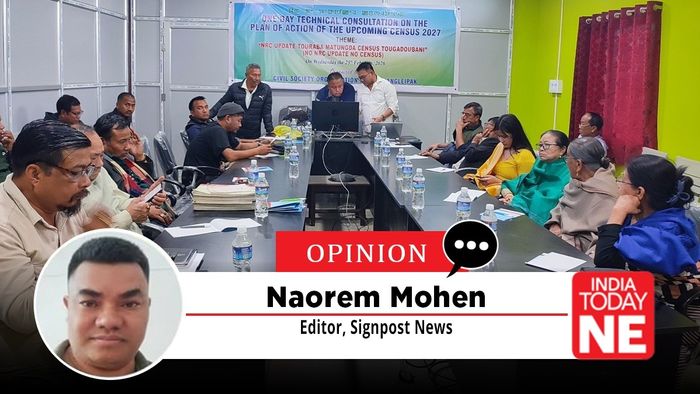
However, groups like the Civil Societies Organization, Kangleipak (CSK)—a coalition of 14 valley-based organizations—launched statewide mobilization on February 26, 2026, beginning in Langthabal Mantrikhong, Imphal West. Their clear demand: No NRC update, no census. Through technical consultations and grassroots campaigns, they have plan to highlight the need for accurate, uncontaminated data before any delimitation. Confusion among some politicians and groups persists, with fears that verification exercises will deepen ethnic divides.
CSK spokesperson, Santa Nahakpam has warned that Manipur's volatile situation, ongoing ethnic tensions since May 2023, displacement of tens of thousands in relief camps, restricted movement in certain areas, and persistent law-and-order challenges makes an accurate census untenable without prior safeguards. Proceeding risks embedding inflated figures that legitimize undocumented presence and fuel demands for separate administrative structures.
The organisation has also cited precedents: censuses deferred in Nagaland, Jammu & Kashmir, Assam, and Arunachal Pradesh due to violence, disasters, or administrative hurdles. Section 3 of the Census Act, 1948, allows such postponements when conditions warrant.
Particularly alarming are historical anomalies in population data. Studies and analyses of Manipur's censuses from 1991–2011 reveal "abnormal" growth rates in certain hill sub-divisions—such as Mao-Maram, Paomata, and Purul in Senapati district, where decadal increases exceeded 100–120% in ways that conventional demographics (fertility, migration within India) cannot plausibly explain.
Besides, irregularities appear in parts of Chandel and other areas. These spikes, documented in academic papers and media reports, suggest possible manipulation or under-enumeration in earlier counts followed by over-inclusion.
Similarly, Campaign for Just and Fair Delimitation (CJFD) rightly argue that SIR cannot substitute for deeper citizenship verification. CJFD convenor Jeetendra Ningomba has emphasized in public meetings and statements that only a National Register of Citizens (NRC) or comparable mechanism can identify and exclude illegal immigrants from the broader population count.
SIR cleans the voter database for elections; NRC establishes who legitimately belongs as a citizen. Conflating the two confuses priorities and delays comprehensive action.This distinction becomes critical as the 2026 census approaches. However, SIR and NRC are complementary, not contradictory: the former ensures electoral fairness now; the latter secures citizenship clarity for the long term. Both demand political courage, courage our MLAs have yet to show.
If unaddressed, such distortions will cascade into the 2026 census, skewing the 2027 delimitation and redrawing constituencies in ways that could marginalize indigenous populations for generations.The stakes for delimitation are immense. Constituency boundaries based on flawed data could entrench power imbalances, divert development funds disproportionately, and erode representation for long-standing communities.
Future generations will inherit a Manipur where numbers, potentially inflated by unchecked influx override historical claims to land, identity, and self-determination. This is not mere speculation; it is the logical outcome of inaction on demographic integrity.
Civil society has stepped forward where elected leaders have faltered. CJFD and CSK continues its public consultations, urging a Cabinet resolution to defer the census until illegal immigrants are identified via NRC or equivalent. They warn that failure risks emboldening separatist narratives and endangering indigenous survival.
The silence from our politicians is the most damning element. No cross-party push for rigorous SIR implementation. No calls to investigate anomalous growth figures. No alignment with N Biren Singh's vigilance appeal or CSK or CJFD deferral plea.
When Assam's leadership confronts these challenges openly, why do Manipur's representatives retreat? Is it political expediency, fear of controversy, or a deeper reluctance to acknowledge that demographic pressures affect all communities?
This cannot continue. Manipur requires leaders who prioritize facts over silence. MLAs must debate SIR progress transparently, advocate for NRC mechanisms, support census deferral if instability persists, and confront abnormal growth data head-on.
Citizens, meanwhile, should back civil society's efforts and heed former CM N Biren Singh's call for alertness. Democracy in Manipur cannot survive on passivity. The path forward demands cleansed rolls, verified citizenship, and fair delimitation—preserving the state's diverse yet indigenous essence.
The alternative is manipulated demographics, eroded rights, and enduring regret.The silence on SIR, NRC, and demographic invasion must end. Our representatives owe us voices, not voids.