A Cry from the Ashes: How India’s Manipur Betrays the Kuki-Zo on World Human Rights Day
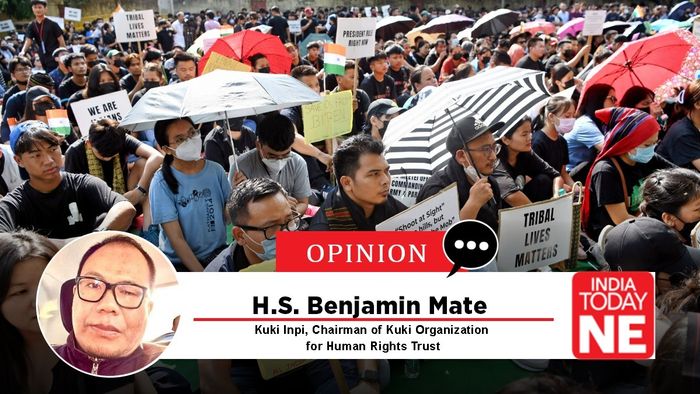
Over 60,000 Kuki-Zo people—indigenous tribes and mostly Christians—mark it not with celebration, but in the suffocating squalor of relief camps. They are haunted by the ghosts of over 300 torched villages and a relentless campaign of unpunished atrocities.
- Dec 10, 2025,
- Updated Dec 10, 2025, 12:41 PM IST
World Human Rights Day should be a global affirmation of the dignity and justice enshrined in the Universal Declaration of Human Rights. Yet, in the hills of Manipur, northeastern India, this day is a stark reminder of promises broken.
Over 60,000 Kuki-Zo people—indigenous tribes and mostly Christians—mark it not with celebration, but in the suffocating squalor of relief camps. They are haunted by the ghosts of over 300 torched villages and a relentless campaign of unpunished atrocities.
Since ethnic violence erupted on May 3, 2023, the world’s largest democracy has presided over a humanitarian catastrophe that systematically strips away the most elemental human rights: life, security, health, and home.
The toll is numbing: at least 260 dead, over 70,000 displaced, and more than 7,000 homes destroyed. But this is not a tragic, spontaneous clash. As documented by international observers and India’s own Supreme Court, it is a crisis of state complicity and catastrophic failure, where the machinery of government has been weaponized against a minority.
The Spark and the Inferno: From Courtroom to Killing Fields
The immediate spark was a Manipur High Court order seen as advancing the Meitei majority’s claim to Scheduled Tribe status—a designation that would grant them access to land in the protected hills where the Kuki-Zo have lived for centuries. The tribal protests that followed were met not with dialogue, but with a brutal and organized onslaught.
What unfolded was a systematic campaign of displacement. Mobs, often backed by vigilante groups like Arambai Tenggol and Meitei Leepun, razed villages with kerosene-fueled precision. Human Rights Watch reports that the former state government "demonstrated a pro-Meitei bias" and that the police "allegedly protected these groups," which looted over 6,000 weapons from state armories. The violence targeted the very pillars of Kuki-Zo identity: 350 churches and religious institutions were reduced to smoldering ruins. A Kuki farmer’s testimony to HRW encapsulates the horror: he watched his village burn from a tree where he hid for his life.
A Humanitarian Crisis Engineered by the State
For those who escaped the violence, a second phase of suffering began in the so-called relief camps. Over 50,000 people remain crammed into these facilities, enduring conditions that Amnesty International describes as "inhumane." A community worker in Churachandpur told Amnesty of rampant outbreaks of measles, dysentery, and fever, with cancer and dialysis patients languishing without specialist care.
The state’s failure is not passive; it is an active barrier. The government’s health camps are sporadic, but the real crisis is one of access. Kuki-Zo citizens cannot safely reach Imphal’s tertiary hospitals, forced instead to undertake 17-24 hour treks through neighboring states. One mother’s story, documented by Amnesty, tells of borrowing money to transport her dying son to a private clinic, only to watch him succumb—government aid was a cruel mirage.
Also Read: A Tangled Border, A Fractured State: How a Fence in Manipur Deepens India's Divisions
This engineered deprivation extends to every right. Education has crumbled, with children in camps surviving on a pittance allowance while their schools lie in ashes. Mobility is nonexistent; Imphal’s airport, just 60 km from Kuki-Zo areas, is a no-go zone, and highways are blockaded by ethnic enclaves. This is not protection; it is collective punishment and internment.
The Architecture of Impunity
Worse than the violence is the impunity that sanctifies it. Kuki-Zo women have faced particularly horrific gender-based violence, including gang-rapes, beatings, and being paraded naked. A viral video of one such assault in May 2023 forced brief national outrage. Yet, as the Supreme Court of India noted, there has been an "absolute breakdown of law and order" and serious allegations that law enforcement "colluded with the perpetrators."
FIRs (police reports) filed against vigilantes gather dust, while hate speech branding Kuki-Zo as "illegal immigrants" and "narco-terrorists" flourishes online and offline. In September 2023, 19 UN Human Rights Council experts appealed to the Indian government, criticizing its "slow and inadequate response" to the violence and the humanitarian void. Their appeal remains largely unaddressed.
A Masterclass in Evasion and Obscurity
The Government of India’s response has been a masterclass in evasion. Prime Minister Narendra Modi broke his months of public silence only after global scrutiny intensified. His visit in September 2025 came with vague promises, but on the ground, relief camps face closure deadlines with no viable resettlement in sight.
The imposition of President’s Rule in February 2025, after the resignation of Chief Minister N. Biren Singh, has merely militarized the divide without disarming the militants or dismantling the architecture of hate. Furthermore, a critical dimension of this crisis is the information blockade. According to Reporters Without Borders, journalists in Manipur operate in a "minefield," facing attacks and intimidation. The region has endured over 210 days of internet shutdowns since the conflict began—one of the world’s longest—stifling information flow, fueling disinformation, and obscuring the scale of the atrocities from national and international view.
The Unanswered Plea for a Political Solution
The Kuki-Zo plea has now crystallized into a formal political demand: a separate administration under the Indian constitution. This call for a "divorce" of territories is not secessionist, but a desperate bid for security and self-preservation, born from the proven impossibility of coexistence under the current state government.
On this Human Rights Day, the message from Manipur is clear. This is not a peripheral conflict in a far-flung state. It is a fundamental test of India’s democratic fabric and its commitment to constitutional rights for all its citizens. The international community must move beyond statements of concern. The UN, the US, the UK, and other democracies with leverage must insist on impartial investigations, targeted sanctions on enablers of violence, and a genuine political process.
The Kuki-Zo are not infiltrators; they are India’s sons and daughters, clinging to faith amid ashes. Their resilience is biblical, but their patience is not infinite. Rights delayed are rights denied. The world must see Manipur’s crisis not as an internal Indian affair, but as a blazing warning sign—a failure to act today will echo far beyond these scarred hills. Dignity, and justice, demand no less.