Act East is coming: Why Manipur students must prepare for Southeast Asia
What if the biggest threat to Manipur's future isn't a lack of roads, but a lack of people prepared to use them? As India's Act East Policy gathers pace, a quiet race has already begun over who will ultimately benefit from the region's strategic location.
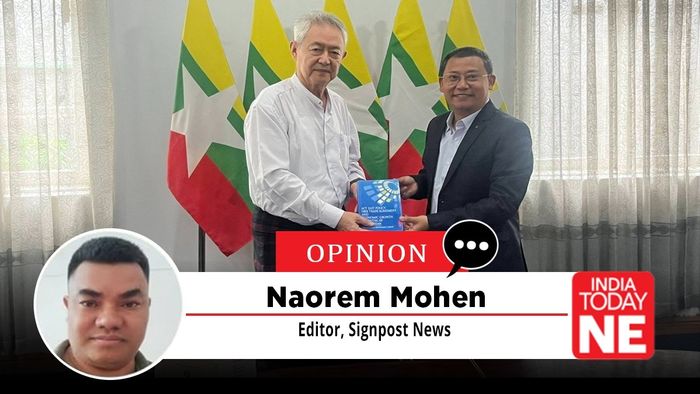
- Jul 30, 2026,
- Updated Jul 30, 2026, 1:23 PM IST
Without knowledge, expertise and institutional readiness, indigenous communities of Manipur and Northeast India may watch others profit from trade routes passing through their own land.
The Act East Policy is no longer a distant promise discussed in official seminars and government documents. It is moving closer to the daily life of Manipur and Northeast India. Roads are being built. Border trade is being discussed with renewed seriousness. India’s engagement with ASEAN is expanding. Southeast Asia is becoming central to India’s economic, diplomatic and strategic thinking. For Manipur, this moment carries both opportunity and danger.
The opportunity is obvious. Manipur stands at one of India’s most important eastern frontiers. Moreh is not merely a border town. It is a possible gateway to Myanmar, Thailand and the wider ASEAN region. If connectivity improves and trade expands, the state may witness new movement of goods, people, capital, services and ideas. Tourism, logistics, food processing, translation, research, education, border trade, cultural industries and policy consultancy may all find new space.
The danger is equally clear. If the indigenous people of Manipur and the wider Northeast do not prepare now, they may become spectators in their own geography. They may see highways pass through their villages, trucks move through their towns, business houses from outside control supply chains, officials from distant places design policies, and better prepared groups capture the benefits. Local people may carry the burden of change without enjoying the rewards of change.
This is the warning that must be heard clearly by students, parents, teachers, civil society organisations, entrepreneurs, administrators and political leaders. Act East will not automatically benefit Manipur. It will benefit those who understand it.
A road alone does not create prosperity. A border gate alone does not create participation. Trade agreements alone do not protect local interests. Infrastructure opens the door, but knowledge decides who enters first. Those who understand Southeast Asia, ASEAN, border trade, regional politics, customs systems, value chains, cultural linkages, security issues and economic policy will be able to take positions of advantage. Those who do not will wait outside while others make decisions. This is the most urgent issue before the younger generation of Manipur and Northeast India.
Students cannot afford to think only in terms of conventional degrees and government jobs. The coming decades will require new kinds of expertise. The region will need researchers who understand Myanmar and Thailand. It will need economists who understand ASEAN trade. It will need journalists who can interpret border developments beyond press releases. It will need lawyers who understand cross-border commerce. It will need entrepreneurs who can identify markets in Southeast Asia. It will need translators, tourism professionals, logistics planners, policy analysts, cultural historians and development specialists. The Act East era will reward prepared minds.
This is why academic programmes such as the M.A. in South East Asian Studies at Manipur University deserve serious public attention. This is not an ordinary course hidden inside a university prospectus. It is one of the most relevant academic programmes for Manipur’s future. At a time when India is looking east, Manipur University is already offering a course that teaches students how to understand the East.
The curriculum covers the idea of Southeast Asia, colonialism, foreign policy, government and politics, economic issues, nationalism, India and Southeast Asia, regional cooperation, nation building, Northeast India and Southeast Asia, research methodology, blue economy, security issues, conflict resolution, refugee studies, gender issues and diaspora studies. These subjects are directly connected to the future of Manipur.
A student who studies India and Southeast Asia will understand why India’s eastern policy matters. A student who studies regional cooperation will understand ASEAN and its institutions. A student who studies Southeast Asian economic issues will understand trade, investment, industrialisation and labour markets. A student who studies Northeast India and Southeast Asia will understand borderlands, cultural linkages, cross-border trade, the Trilateral Highway and value chains. A student who studies conflict resolution and refugee studies will understand the human and security challenges that come with porous borders and unstable neighbourhoods.
The course is also relevant to peace building in Manipur and the wider Northeast. By studying borderlands, ethnicity, migration, conflict resolution, refugee issues, regional security and the shared histories of Northeast India and Southeast Asia, students can develop a more informed understanding of the tensions that shape the region. Such knowledge encourages dialogue over suspicion, evidence over rumour, and institutional thinking over narrow identity politics. In a region marked by complex histories and fragile social relations, South East Asian Studies can help prepare a generation capable of interpreting conflict with maturity and contributing to peace with knowledge.
This is not academic knowledge. This is practical preparation for a changing region.
Equally important is the faculty and research foundation already available within the department. The Department of South East Asian Studies, which was established in 2019 has not remained limited to textbook teaching. It has also been linked with serious research on the Act East Policy, the India-ASEAN Free Trade Agreement and the economic growth potential of ASEAN member countries. Manipur University records a completed ICSSR-funded project by one of its Faculty, Assistant Professor Dr. Loitongbam Bishwanjit Singh on “Act East Policy, India-ASEAN Free Trade Agreement and Economic Growth Potential of Member Countries,” sanctioned in 2019.
This is significant because it shows that the university already has scholars working on the very questions that the public must now take seriously. The issues being debated in government corridors, trade bodies, policy seminars and media discussions are not entirely outside the academic reach of Manipur. There are faculty members and researchers within the state who have studied these questions with institutional support and scholarly discipline. This academic resource must not be ignored.
Students must look seriously at South East Asian Studies at Manipur University because the future of Manipur will increasingly be shaped by its relationship with Southeast Asia. This course gives young people the academic foundation to understand Act East, ASEAN, Myanmar, Thailand, border trade, regional cooperation, cultural linkages and the political economy of connectivity. At a time when trade, transport and diplomacy are moving towards the eastern frontier, students who study this subject will be better prepared to work in research, policy, journalism, administration, entrepreneurship, tourism, logistics and international engagement. For Manipur youth, this is not only a degree. It is preparation for participation in the future passing through their own land.
The urgency of this academic preparation is not recognised by Manipur University alone. Across the Northeast, several universities have begun to understand that Act East requires knowledge institutions, not only roads and border gates. Gauhati University has a Centre for South East Asian Studies within its Department of Political Science, established in 2017 with support from the Government of Assam. Nagaland University has a Centre for South East Asian Studies that offers PG Certificate and Ph.D. programmes in Southeast Asia and the Indo-Pacific, with an explicit focus on India’s Look East and Act East Policy. Dibrugarh University, through its Centre for Studies in Languages, has linked Tai language studies with India’s cultural and economic connections to Southeast Asia. Manipur University of Culture has also recognised the need for serious ethnic and cultural studies connecting Manipur with adjoining Southeast Asian regions.
These examples show that the Northeast is slowly building an academic foundation for Act East. But Manipur University’s M.A. in South East Asian Studies remains one of the most direct and strategically relevant programmes for students who want to understand ASEAN, Myanmar, Thailand, border trade, regional cooperation, Southeast Asian politics, economic linkages and the historical connections between Northeast India and Southeast Asia. This is precisely why students in Manipur must not treat the subject as marginal. It is a course for the coming age.
The responsibility, therefore, is not only on the university. It is on society to recognise the value of such academic work. Students must come forward to study these subjects with seriousness. Parents must understand that such courses are linked to the future economy of the region. Government departments must consult local scholars. Civil society organisations must draw upon academic expertise before forming public positions. Media houses must engage with researchers who understand Southeast Asia beyond slogans. Entrepreneurs must learn from available studies instead of waiting for outside consultants to interpret their own region.
For too long, Manipur has treated knowledge as secondary to politics. Public discussions often begin only after a crisis has already arrived. Roads are discussed after blockades. Border trade is discussed after smuggling becomes a concern. Migration is discussed after social anxiety deepens. Development is discussed after projects are already planned elsewhere. This reactive habit must end. The Act East Policy demands advance preparation.
Indigenous communities must understand that cultural pride alone will not secure economic participation. Historical rights alone will not guarantee a share in future trade. Political slogans alone will not create jobs for young people. To protect local interests, communities need trained professionals who can read documents, study agreements, analyse markets, communicate across borders and advise institutions.
If local people do not acquire expertise, outsiders will do it for them. This should worry every serious citizen of Manipur. When trade expands, there will be competition. Larger firms may enter with capital. Consultants may arrive with technical language. Logistics companies may control movement. Contractors may dominate infrastructure. Traders with stronger networks may capture profit. Local communities may be asked to provide land, labour and tolerance, while the real value moves elsewhere.
That is how a region becomes a corridor without becoming prosperous. Manipur must not allow this to happen.
The state cannot be satisfied with being a passage between India and Southeast Asia. It must become a thinking, negotiating and participating society. It must produce experts who can sit at policy tables. It must produce young entrepreneurs who can trade with confidence. It must produce researchers who can guide the government. It must produce journalists who can inform the public. It must produce teachers who can train the next generation. It must produce civil society leaders who can speak with knowledge, not merely emotion. This requires a change in attitude.
Parents must stop treating new academic fields with suspicion. Students must stop choosing courses only because they appear familiar. Universities must stop functioning only as examination centres. Government departments must stop ignoring academic expertise available within the state. Civil society organisations must stop relying only on agitation and begin investing in knowledge. Business bodies must encourage young people to study trade, logistics and regional economics. The future will not be kind to those who wait without preparation.
Manipur University’s Department of South East Asian Studies can become a strategic knowledge centre for the entire region. It should not be confined to classroom teaching alone. It should organise public lectures for students from all departments. It should conduct short courses for journalists, entrepreneurs, civil servants, youth leaders and civil society groups. It should prepare policy briefs on Act East. It should study the economic potential of Moreh, border trade, Myanmar developments, ASEAN markets and the social impact of connectivity.
The government should actively support such efforts. Scholarships must be provided for students pursuing South East Asian Studies and related fields. Internships should be created with trade bodies, customs agencies, tourism departments, media houses and policy institutions. Students should be encouraged to learn languages connected to Southeast Asia. Research projects should be funded on Manipur’s role in Act East, the Trilateral Highway, cross-border commerce, cultural routes and indigenous participation. This is how a society prepares.
The responsibility also belongs to the business community. Local entrepreneurs must not wait until outside firms capture the field. They must study markets in Myanmar, Thailand, Vietnam, Laos, Cambodia, Malaysia, Indonesia and Singapore. They must understand demand, supply, packaging, quality standards, transport cost, border documentation and digital trade. Traditional products, handloom, food items, medicinal plants, cultural tourism and educational services can all become part of a larger economic story, but only if handled professionally. Romantic talk of local potential is not enough. Potential must be organised.
Civil society also has a role. In Manipur, civil society organisations are powerful voices. They influence public opinion and often intervene during crises. But in the Act East era, civil society must develop policy literacy. It must understand how trade affects land, employment, migration, environment, security and local culture. It must defend indigenous interests with evidence, not only sentiment. It must ask the right questions before projects arrive, not only after damage has been done. Students remain the most important group in this discussion.
The young people of Manipur and Northeast India must recognise that the world around them is changing. The old idea that success means only a government post is no longer enough. The region needs a new generation trained in international relations, economics, border studies, languages, public policy, logistics, tourism, media, technology and cultural studies. Those who acquire such knowledge will not only find careers. They will become interpreters of their own region’s future.
This is why students should seriously consider courses such as South East Asian Studies. It offers them the intellectual foundation to understand the region that India is trying to connect with. It gives them the ability to connect local realities with wider regional processes. It helps them see Manipur not as a remote corner, but as a strategic frontier with history, culture and economic relevance. For indigenous communities, this is a matter of self-preservation as much as opportunity.
If others understand our location better than we do, they will define its value. If others understand trade better than we do, they will control its benefits. If others understand policy better than we do, they will shape its rules. If others understand Southeast Asia better than we do, they will become the bridge while we remain the ground beneath it.
That must not be allowed. The Act East Policy must not turn Manipur into a silent road for other people’s ambitions. It must become a platform for local advancement, indigenous participation and regional confidence. That will happen only when knowledge becomes a public priority.
The coming Act East phase will separate prepared societies from passive societies. Prepared societies will create institutions, train experts, support students, encourage entrepreneurship and defend their interests intelligently. Passive societies will complain after others have already taken the lead. Manipur must choose the first path.
The call today is urgent. Students must prepare. Parents must guide. Teachers must mentor. Universities must lead. Civil society must study. Entrepreneurs must learn. Policymakers must invest in knowledge. Indigenous communities must understand that the coming trade through Manipur will not wait for anyone.
If we prepare, Act East can become a historic opening for Manipur and Northeast India. If we remain unprepared, the same policy may pass through our land while leaving our people behind.
The road to Southeast Asia may pass through Manipur. The question is whether Manipur will merely watch it pass, or rise with the knowledge, confidence and expertise to walk that road as an equal participant.
(The views expressed in this article are those of the author and do not necessarily reflect the views of India Today NE or its affiliates)