Census May Be Deferred in Manipur, But How Prepared Is the State for NRC?
The combined effort of Just and Fair Delimitation (JFD), the 14 civil society organisations associated with the movement, and other major organisations including United Naga Council, Joint Tribe Council, Thadou Inpi Manipur, and Imagi Meira appears to be moving towards a significant outcome.
- Aug 22, 2026,
- Updated Aug 22, 2026, 2:10 PM IST
The combined effort of Just and Fair Delimitation (JFD), the 14 civil society organisations associated with the movement, and other major organisations including United Naga Council, Joint Tribe Council, Thadou Inpi Manipur, and Imagi Meira appears to be moving towards a significant outcome. Indications emerging from New Delhi suggest that the Ministry of Home Affairs is ready to consider deferring the Census exercise in Manipur, responding to the sustained demand that the State’s citizenship and demographic concerns should be addressed before enumeration proceeds.
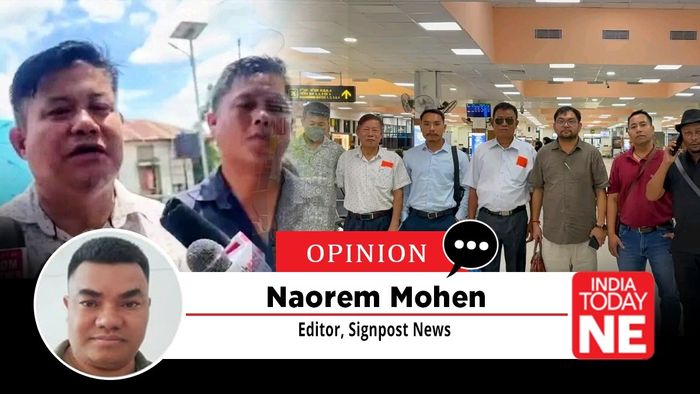
What began as demonstrations, rallies and public mobilisation in Manipur was also carried to New Delhi, where civil society representatives led by Shanta Nahakpam, along leaders from other communities pursued the issue with the concerned authorities. There are also reports that the Ministry of Home Affairs will hold a Manipur-specific meeting on the issue. Such a meeting, if held, could become important in determining the way forward.
Until an official decision is announced, deferment should not be treated as a concluded fact. But if the indications from Delhi materialise, it will represent a significant achievement for the people who came onto the streets and for the organisations that kept the demand for NRC before Census at the centre of public debate.
But success in getting the Census deferred immediately raises the more difficult question: how prepared is the Manipur Government to actually undertake the groundwork for NRC?
Postponing the Census was never supposed to be the final objective. The larger purpose of the movement is to protect Manipur’s indigenous population and demographic future through a credible mechanism capable of distinguishing citizens from illegal immigrants.
If New Delhi now provides Manipur the time it has demanded, responsibility will shift substantially towards the State Government.
The question is no longer only whether Manipur wants NRC. The question is what Manipur has prepared for it. A slogan can mobilise people and compel governments to listen. It cannot by itself create a National Register of Citizens.
An NRC requires records, legal procedures, administrative machinery, trained personnel, verification mechanisms, technology, safeguards against wrongful exclusion and an effective system for claims and appeals.
If Census is deferred, Manipur should therefore enter the second phase of the movement immediately: preparation. The State Government should not spend the additional time waiting for instructions from Delhi. It should use the period to prepare an NRC framework capable of being placed before the Union Government.
The first requirement is documentation. Manipur is not beginning from a blank page. Its documentary history extends far before 1951. Historical Census records, electoral rolls, village and administrative records, land and revenue records where applicable, and other government archives should be identified, catalogued and preserved.
Records connected with Manipur’s historic 1948 State Assembly election deserve particular attention because they provide an important documentary layer immediately preceding 1951.
The Government should know exactly what survives in its archives. Where are the old electoral rolls? What historical Census-related records are available? What village registers survive? Which records are already digitised? Which remain only on ageing paper? Which departments possess them? Which documents could have legal evidentiary value in an eventual NRC?
This work does not require Manipur to wait for NRC itself. It can begin now.
The next task should be the creation of a comprehensive digital archive of historical population-related records. Many documents required for an NRC could be decades old. Paper deteriorates. Files disappear. Names and village boundaries change. Administrative offices are reorganised.
Waiting until an NRC notification arrives before searching for these records would be a serious mistake.
The State Government could establish a dedicated Manipur Historical Population and Legacy Records Project to locate, authenticate, scan and index relevant documents.
A searchable legacy database could eventually allow families to establish linkage with ancestors appearing in authenticated historical records instead of forcing citizens to search individually through fragile government files.
Assam’s NRC experience offers lessons that Manipur can study, including lessons about what worked and what produced disputes. Manipur does not need to mechanically copy Assam, but it should not begin without learning from it either.
This is also where the choice of a historical base year becomes important.
For many supporting NRC in Manipur, 1951 is not an arbitrary date. It is seen as a documentary and political marker close to the early post-Independence period, before later waves of migration, refugee movement and subsequent claims of community inclusion entered the public debate. Some organisations also argue that certain communities entered Manipur from Myanmar after 1951 and later sought inclusion in the Scheduled Tribe list or recognition within Manipur’s indigenous framework.
If there were post-1951 entries, refugee movements, official recognitions, applications for Scheduled Tribe inclusion or later administrative classifications, the relevant files should be located and studied.
The question is not to target any community. The question is to establish a documentary basis for determining who had historical roots in Manipur before the chosen cut-off and who entered later under different legal or administrative circumstances.
One objection already emerging in the NRC debate is that residents of remote areas may not have been adequately documented around 1951. Such concerns should be examined through evidence. A credible NRC framework can provide for multiple legally admissible documents capable of establishing pre-cut-off presence and subsequent family linkage.
Historical Census material may form part of that evidence. Electoral records may provide another layer. Recognised village, administrative or other contemporaneous records may also be considered, subject to legal scrutiny.
The principle should be clear: a genuine indigenous citizen should not be excluded merely because one historical document is missing. At the same time, gaps in one set of records cannot become a reason to abandon verification altogether.
That balance has to be designed before NRC begins.
If organisations or communities maintain that particular villages were not properly enumerated in earlier periods because of remoteness, the deferment period provides an opportunity to examine those claims systematically.
Which villages are said to have been omitted? Do they appear in earlier Census records? Were they represented in the 1948 electoral system? When do they first appear in administrative records? Are there contemporary complaints or official correspondence recording their omission?
Instead of allowing these questions to become permanent ethnic arguments, Manipur should create a historical verification process capable of examining them.
Where genuine omissions are established, safeguards can be designed. Evidence should resolve what political assertion cannot.
There is another reason why the historical line cannot simply be dismissed. Manipur’s archives and published accounts also contain references to refugee movement from Burma after Independence.
Records relating to specific Kuki refugees from Burma, refugee assistance and later representations associated with the Burma Kuki Refugee Association, Manipur have entered public discussion. There can be indigenous Kuki families whose roots in Manipur predate 1951, and there can also have been later Kuki refugees arriving from Burma.
Ethnicity cannot distinguish between those histories. Records can. That is one reason citizenship verification matters.
Historical refugee records also produce questions that should be answered through government documentation rather than political speculation.
If particular people were officially recognised as refugees and received relief or rehabilitation assistance, what subsequently happened to them? Were they repatriated? Did they remain in Manipur? Were some eventually granted Indian citizenship? If citizenship was granted, under what provisions and to how many? What records document that transition? And what is the legal status of their descendants today?
These are legitimate questions. They are not predetermined conclusions.
A refugee can, depending on the applicable law and circumstances, subsequently acquire citizenship. If that happened lawfully, the resulting citizenship must be respected. But there should be a documentary trail.
The State and Union governments are better placed than competing political organisations to produce it. Where historical refugee records exist, open them. Where naturalisation or citizenship records exist, establish what they show. Where people were repatriated, document that. Where records are incomplete, acknowledge the gap.
The documentary exercise should extend to all official records concerning migration and refugees entering Manipur after the eventual cut-off. There is also a separate but related question concerning the Bengal Eastern Frontier Regulation, 1873 and the Inner Line Permit system in Manipur.
The present ILP framework in Manipur operates under the Bengal Eastern Frontier Regulation, 1873 as extended to the State through the Adaptation of Laws (Amendment) Order, 2019. The Manipur ILP portal describes the permit as an official travel document issued by the State Government to regulate inward movement and stay.
This history matters for NRC preparation because every system created to regulate entry should also have produced records. Permit registers, entry passes, renewals, exemptions, overstay notices, deportation records, police reports and administrative correspondence may contain valuable information about who entered Manipur from outside, when they entered, how long they were permitted to stay and whether they became permanent residents through any lawful process.
The old Inner Line and foreigners-related records can still become important supporting material in preparing a credible documentary base.
If Manipur is serious about NRC, the Government should examine whether historical records maintained under earlier permit, foreigners-control or entry-regulation systems still exist in the Home Department, district offices, police records or archives. If they exist, they should be preserved, digitised and legally assessed. If they are incomplete, that gap too should be acknowledged.
Manipur shares an international border with Myanmar and has experienced cross-border movement over different historical periods. Where government records identify refugee arrivals, rehabilitation, repatriation or subsequent changes in legal status, those records should be preserved and examined.
Moreover, the State Government should consider constituting a multidisciplinary NRC Preparatory Committee without waiting for the final Census decision.
It should bring together constitutional and citizenship-law experts, historians, archivists, demographers, administrators, technology specialists and people familiar with the different historical record systems of Manipur.
Representatives or experts from different indigenous communities should also have a meaningful role so that the eventual framework commands public confidence.
Its task should be preparatory: identify available records, examine the legal framework, propose admissible legacy documents, design family-linkage procedures, identify possible gaps, recommend safeguards and appeals, assess manpower and technology requirements and estimate the administrative cost.
The final product should be a Manipur NRC Framework Paper that the State Government can place before the Union Government.
That would give Delhi something more substantial than another memorandum.
It would give Delhi a plan. For too long, major political questions in Manipur have followed a familiar pattern. A problem intensifies, public anger grows, delegations travel to Delhi and everyone waits for the Centre to provide the next answer. NRC cannot be approached that way.
Citizenship is ultimately governed by Union law and the Centre will have the decisive constitutional and administrative role. But much of the groundwork required to make a Manipur-specific exercise credible must come from Manipur itself.
The State knows its administrative history. The State possesses many of the records. The State understands the changes in village names and boundaries. The State can identify archival gaps. The State can begin digitisation. The State can bring communities and experts together. The State can prepare the proposal.
Delhi may have to authorise the road, but Manipur must first prepare the map. The organisations that brought NRC-before-Census onto the streets also have a responsibility if Census is deferred.
Just and Fair Delimitation (JFD), the 14 civil society organisations, United Naga Council, Joint Tribe Council, Thadou Inpi Manipur, Imagi Meira and other organisations involved in the movement should consider moving part of their effort from mobilisation towards documentation and policy preparation.
They can help identify historical records held by communities and families. They can organise consultations with historians and legal experts. They can document claims of historically omitted villages. They can help citizens understand why old records should be preserved.
They can also pressure the Government, not merely to announce support for NRC, but to demonstrate measurable preparation for it.
If Census is deferred, everybody may declare victory, demonstrations may end and the issue may slowly disappear from administrative priority.
A year later, Manipur could find itself facing the same Census question without being any closer to NRC. That cannot be allowed to happen.
The period gained through deferment should have measurable milestones: historical records located, archives digitised, legal consultations completed, disputed documentation examined, a legacy-data framework designed, communities consulted and a formal NRC proposal submitted to the Centre.
The Government should periodically tell the public what progress has been made. The movement demanded time. If that time is granted, Manipur must be able to show what it did with it.
If the indications from Delhi become an official decision, the combined movement of Just and Fair Delimitation (JFD), the 14 civil society organisations, United Naga Council, Joint Tribe Council, Thadou Inpi Manipur, Imagi Meira, other organisations and the people who participated on the streets will have achieved something significant.
Their pressure would have created a political and administrative window that did not exist before. But the movement should judge its success not merely by whether the Census was deferred.
The original demand was never simply No Census. It was NRC before Census. That distinction now becomes crucial. Stopping or postponing one exercise does not automatically create the other.
If Manipur gains time, the State Government must use it to locate the records, build the digital archive, settle documentary questions, prepare safeguards, consult communities and develop a legally workable proposal for NRC.
The civil society movement has done its part in forcing the issue onto the table. If reports of a Manipur-specific meeting at the Ministry of Home Affairs are correct, the opportunity to move from demand to implementation may now be opening.
The people may have created the window. The question now is whether the Manipur Government is prepared to use it.
If Census is deferred, the countdown for NRC preparation should begin the same day.