CoTU’s Ultimatum: When the Blockade Operator Demands Open Highways
CoTU has given the Centre and Manipur government 48 hours to remove unauthorised checkpoints and restore free movement through Kangpokpi district. The demand has drawn attention to the group’s own record of shutdowns and blockades on NH-2 and NH-37.
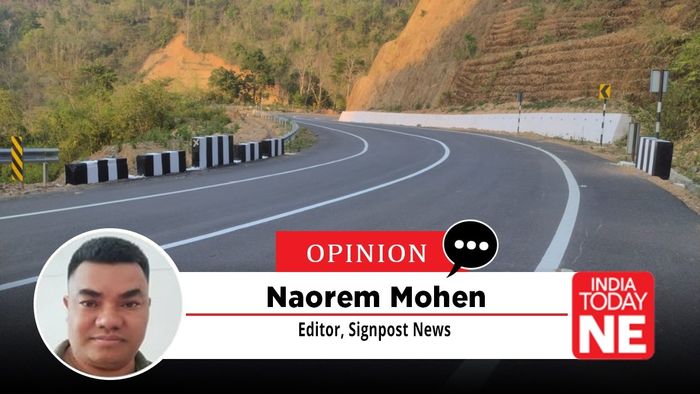
- Jun 28, 2026,
- Updated Jun 28, 2026, 12:55 PM IST
There is a peculiar irony in CoTU’s latest 48-hour ultimatum to the Central and State governments. An organisation that has repeatedly called shutdowns and blockades along NH-2 and NH-37 for three years now speaks the language of free movement, essential commodities, medicines, public access, and equal protection.
The demand may sound reasonable in isolation, but it cannot be separated from CoTU’s own record. When those who helped turn national highways into instruments of pressure suddenly demand open highways, the public is entitled to ask: Was free movement a constitutional right only when CoTU needed it?
The Committee on Tribal Unity’s press release dated 27 June 2026 should be read carefully, not because it says something new, but because it says something deeply revealing. CoTU has now issued a 48-hour ultimatum to the Central and State governments demanding removal of unauthorised checkpoints and restoration of free movement along National and Inter-State Highways passing through Kangpokpi district.
The language of the press release is instructive. CoTU describes road transportation as “the lifeline of the people and the backbone of economic activities.” It speaks of obstruction to essential commodities, goods, medicines and daily basic necessities. It complains of immense hardship to communities. It demands unrestricted public access. It warns that failure to act will compel the Kuki-Zo community to undertake “appropriate and pre-emptive democratic measures.” At the bottom of the release appears the slogan: “Justice, Security, and Equal Protection for All.”
Taken in isolation, these are valid concerns. No public highway should be obstructed by unauthorised checkpoints. No essential commodity should be blocked. No citizen should be deprived of medicines, food, transport or lawful movement. No community should be made to suffer because public roads are controlled by groups outside the formal authority of the State.
But CoTU’s problem is not the language it has used. Its problem is its own record. For three years, CoTU has repeatedly used the highways of Manipur as instruments of pressure. It has called shutdowns, imposed blockades, disrupted movement and helped normalise the idea that NH-2 and NH-37 can be switched on and off according to political convenience. The same organisation that now describes highways as the lifeline of the people has, on multiple occasions, participated in choking that lifeline.
This is the contradiction that cannot be ignored. When CoTU imposed shutdowns, did it not know that highways carry essential commodities? When it blocked or disrupted movement, did it not know that medicines, goods, fuel, students, patients, transporters and ordinary families depend on these roads? When vehicular movement was halted, did the suffering of others not count as hardship? When Meitei civilians could not freely access these routes since the outbreak of the conflict on May 3, 2023, did “unrestricted public access” not matter?
The press release now speaks the language of constitutional rights. But constitutional rights cannot be discovered only when one feels inconvenienced. The right to free movement is not a seasonal principle. It cannot be denied to others for three years and then invoked with urgency when one’s own area faces obstruction. This is why CoTU’s 48-hour ultimatum appears less like a principled defence of public highways and more like an attempt to claim exclusive ownership over the meaning of hardship.
The highways of Manipur do not belong to CoTU. They do not belong to any valley organisation, any hill organisation, any armed group, any civil society body or any ethnic front. NH-2 and NH-37 are national highways. They are public infrastructure. They belong to the citizens of India and must remain open to all citizens without ethnic discrimination, intimidation or selective access.
If CoTU now says that road transportation is the backbone of economic life, then it must first acknowledge that every shutdown it called damaged that same economic life. If CoTU now says medicines and daily necessities must not be obstructed, then it must accept that its own blockade politics caused the same form of suffering. If CoTU now demands equal protection for all, it must clarify whether “all” includes those Meitei civilians, truck drivers, traders and ordinary commuters who have been denied safe and normal passage through these corridors.
This is not a matter of scoring political points. It is a matter of institutional honesty. Manipur’s highways have become symbols of fragmented authority. A national highway should not require clearance from a civil body. It should not depend on local negotiations. It should not be opened today and closed tomorrow because one organisation issues a statement. Once this pattern is accepted, every group will claim the same right to blockade, shut down, restrict, monitor and bargain. That is not democracy. That is coercion wearing democratic language.
CoTU’s phrase “pre-emptive democratic measures” deserves particular attention. In normal democratic practice, grievances are placed before courts, authorities, elected representatives and the public through lawful means. In Manipur’s recent experience, similar phrases often precede shutdowns, blockades and pressure tactics that punish civilians before they reach the government. If the result of such “democratic measures” is again the obstruction of highways, then the word democratic loses meaning.
The pending PILs concerning highway closures make the issue even more serious. Once the question of free movement along national highways is before the court, no organisation should try to settle the matter through ultimatums. The proper route is evidence, legal accountability and uniform enforcement of constitutional rights. If CoTU believes that unauthorised checkpoints are illegal, it should place the facts before the court and the competent authorities. But it cannot claim moral authority over highway freedom while refusing to answer for its own record of shutdowns.
The government, too, cannot escape responsibility. It must remove all unauthorised checkpoints, whether operated by Naga groups, Kuki groups, Meitei groups or any other formation. It must prevent attacks on trucks, harassment of drivers, obstruction of medicines and selective movement of civilians. It must ensure that highways are not governed by ethnic control, local intimidation or administrative weakness.
But the same government must also make it clear that no civil society organisation has the right to dictate highway governance through blockade threats. Listening to grievances is one thing. Submitting to ultimatums from a group with a history of highway shutdowns is another. The principle must be simple and universal. No unauthorised checkpoint. No highway blockade. No selective access. No ethnic obstruction. No shutdown politics. No private control over national roads.
If this principle applies only when CoTU demands it, it is not justice. If it applies only when one community suffers, it is not equal protection. If it excludes Meitei civilians, transporters, traders and others, it is not “for all.”
The irony of CoTU’s latest press release is that it has finally articulated the case against blockade politics more effectively than many of its critics. It has admitted that highway obstruction causes hardship. It has admitted that essential commodities must move. It has admitted that public access must be unrestricted. It has admitted that highways are lifelines. The only missing admission is that CoTU itself helped create the very culture of obstruction it now condemns.
Until that admission is made, its ultimatum will remain morally incomplete. The highways of Manipur must be opened, secured and protected. But they must be opened for everyone, not merely for those who issue the loudest warning. They must be protected by law, not by selective outrage. They must function under the Constitution, not under the permission of committees.
CoTU has asked for free movement. The people of Manipur should ask for something larger: free movement for all, at all times, on all national highways, without shutdowns, blockades, checkpoints or ethnic veto. That is the real test of justice, security and equal protection.
(The views expressed in this article are those of the author and do not necessarily reflect the views of India Today NE or its affiliates)