Dharmendra Pradhan's Legacy: The Minister Who Fell Amid Crisis but Changed the Direction of Indian Education
The NEET controversy brought Dharmendra Pradhan's tenure to an abrupt close, but his years as Union Education Minister will also be remembered for implementing one of independent India's most ambitious education reform programmes, NEP 2020.
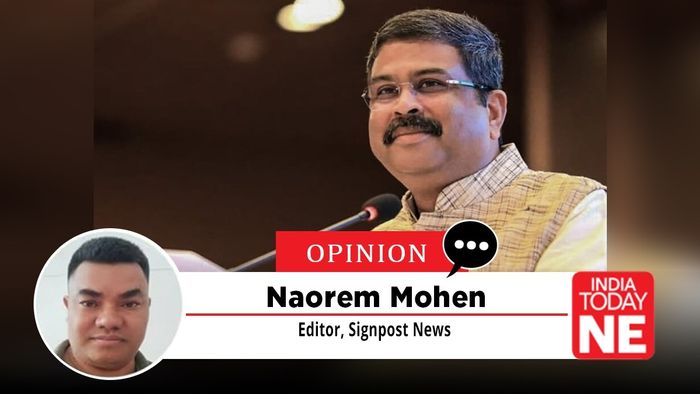
- Jul 27, 2026,
- Updated Jul 27, 2026, 11:22 AM IST
The resignation of Union Education Minister Dharmendra Pradhan in the wake of the National Eligibility cum Entrance Test (NEET) controversy marks one of the most consequential moments in recent Indian education policy. It represents both a political acknowledgment of administrative failure and an opportunity to examine a tenure that reshaped India's education system in ways that will remain relevant for decades.
Few education ministers have left office under such intense public scrutiny. Fewer still have presided over reforms as comprehensive as those implemented during Pradhan's tenure. The controversy surrounding the conduct of NEET understandably dominated public discourse, raising serious concerns about the credibility of competitive examinations and the institutional capacity of agencies entrusted with determining the futures of millions of students. Those concerns demanded accountability, and in a parliamentary democracy, accountability ultimately rests with the political executive.
At the same time, reducing Pradhan's ministerial record solely to the events surrounding NEET would offer an incomplete assessment of his contribution to Indian education. His tenure combined one of the country's most ambitious education reform programmes with one of its most serious examination crises. Both deserve careful evaluation.
The immediate trigger for the political crisis was the widespread controversy surrounding the conduct of NEET. Allegations of paper leaks, irregularities in examination centres, inflated scores, and concerns over the integrity of the testing process generated nationwide protests. Students, parents, educational institutions, and political parties questioned whether the examination system had adequately protected fairness and merit. Since NEET serves as the gateway to medical education for millions of aspirants, any compromise in its credibility carried profound implications for public trust.
The controversy extended beyond the examination itself. It raised broader questions about institutional governance, administrative oversight, technological safeguards, and the ability of examination authorities to conduct large-scale national tests with integrity. Public confidence in competitive examinations, painstakingly built over decades, appeared to weaken within a matter of weeks.
Recognising the seriousness of the crisis, the Ministry of Education initiated a series of corrective measures. Investigations were ordered into allegations of malpractice, law enforcement agencies were tasked with identifying and dismantling organised paper leak networks, and the functioning of the National Testing Agency (NTA) came under comprehensive review.
Several senior officials associated with the NTA were removed from their responsibilities or suspended pending inquiry as the government sought to establish administrative accountability while investigations continued. These measures reflected an acknowledgement that restoring public confidence required decisive institutional action rather than procedural explanations alone.
The government also initiated broader reforms to strengthen examination governance. Security protocols, technological safeguards, and operational procedures were placed under review to prevent similar incidents in future national examinations. Although these interventions demonstrated administrative responsiveness, they could not fully contain the growing public discontent. The controversy had evolved beyond an examination management issue into a question of institutional credibility and political responsibility.
In democratic systems, ministerial accountability extends beyond personal involvement in administrative decisions. Ministers are expected to assume responsibility for the functioning of the institutions under their charge, even when operational failures occur at subordinate levels. This principle forms one of the foundations of responsible government. Pradhan's resignation therefore represented more than an admission of administrative shortcomings. It reaffirmed the convention that political leadership carries ultimate responsibility for preserving public confidence in critical national institutions.
That accountability should neither obscure nor diminish the extensive reforms undertaken during his tenure. Before the NEET controversy came to define the closing chapter of his ministerial career, Pradhan had overseen the implementation of the National Education Policy (NEP) 2020, a reform agenda that sought to reshape Indian education from early childhood through higher education.
Although the NEP was approved in 2020 before Pradhan assumed charge of the Ministry of Education, its successful implementation depended upon sustained political leadership, administrative coordination, legislative support, and institutional engagement across the Union and the states. In many respects, the implementation phase proved more demanding than the formulation of the policy itself.
Pradhan inherited a document that outlined an ambitious vision. Translating that vision into administrative reality required navigating India's federal education structure, coordinating with state governments, higher education institutions, regulatory bodies, examination agencies, and school systems that differed significantly in capacity and priorities. The pace of implementation naturally varied across states, but several foundational reforms moved from policy documents into practical execution during his tenure.
Among the most significant initiatives was the restructuring of school education around the 5+3+3+4 curricular framework, replacing the earlier 10+2 model. The revised structure aligned educational stages more closely with children's cognitive development and expanded the focus on foundational literacy and numeracy during the earliest years of schooling. The government also strengthened programmes designed to improve basic learning outcomes, recognising that long-term educational success begins with strong foundational competencies rather than examination performance alone.
The ministry also accelerated efforts to promote multidisciplinary learning within higher education. Universities were encouraged to move away from rigid disciplinary boundaries by introducing flexible curricula, multiple entry and exit options, academic credit mobility, and broader opportunities for students to combine subjects across traditional streams. These reforms reflected an understanding that contemporary economies increasingly reward adaptability, interdisciplinary knowledge, and lifelong learning rather than narrow specialisation.
Higher education governance also entered a period of institutional restructuring. The ministry advanced reforms intended to simplify regulatory mechanisms, promote institutional autonomy, strengthen accreditation systems, and encourage greater emphasis on research and innovation. Although several proposals remain works in progress, the direction of reform signalled a shift towards improving both academic quality and administrative efficiency.
One of the defining characteristics of Pradhan's tenure was the renewed emphasis placed on Indian languages, cultural knowledge systems, and civilisational heritage within education. The NEP encouraged the use of mother tongues and regional languages as mediums of instruction during the foundational years while simultaneously promoting multilingual learning. The objective extended beyond linguistic preference. It reflected growing evidence that children often acquire foundational concepts more effectively when taught in languages familiar to them during early education.
The emphasis on Indian languages formed part of a broader effort to integrate Indian Knowledge Systems into mainstream education. Universities and higher educational institutions were encouraged to introduce courses that drew upon India's intellectual traditions in philosophy, mathematics, medicine, literature, environmental practices, governance, and the arts.
The objective was not to replace modern scientific education but to broaden the academic framework by recognising indigenous systems of knowledge alongside contemporary disciplines. Supporters viewed this as an effort to correct a long-standing imbalance in the curriculum, while critics cautioned that such initiatives must remain firmly grounded in scholarly rigour and empirical research. The long-term success of this component will depend upon the quality of academic scholarship rather than administrative directives alone.
Another important feature of Pradhan's tenure was the expansion of digital education. The experience of the COVID-19 pandemic had exposed both the possibilities and the limitations of technology-enabled learning. The Ministry sought to strengthen digital platforms such as DIKSHA, SWAYAM and other online learning initiatives while promoting hybrid models of teaching in schools and higher educational institutions. Digital resources became more widely accessible, although disparities in internet connectivity, digital infrastructure and device ownership continued to limit equitable access, particularly in rural and economically disadvantaged regions.
Research and innovation also received greater policy attention. The establishment of the National Research Foundation, proposed under the National Education Policy, reflected an attempt to strengthen India's research ecosystem by promoting interdisciplinary collaboration and improving research funding across universities. Although the institution remains in its formative stage, it represents an acknowledgement that India's aspiration to become a global knowledge economy requires stronger investment in scientific inquiry, innovation and academic excellence.
Pradhan's tenure also witnessed continued emphasis on skill development and vocational education. Efforts were made to integrate vocational learning into mainstream schooling, strengthen industry-academia collaboration and expand opportunities for students to acquire practical competencies alongside academic qualifications. These initiatives sought to reduce the long-standing divide between general education and employability, an issue that has challenged India's education system for decades.
Like every major reform programme, the implementation of the National Education Policy has encountered significant challenges. Education remains a concurrent subject under the Constitution, requiring sustained cooperation between the Union and state governments.
Several states adopted various components of the policy at different stages, while others expressed reservations over particular provisions relating to language, governance and institutional restructuring. Financial constraints, teacher training, curriculum development and administrative capacity also influenced the pace of implementation. Such variation was perhaps inevitable in a country characterised by remarkable linguistic, cultural and institutional diversity.
Critics have also questioned whether ambitious policy objectives have been matched by adequate financial commitments and implementation capacity. Some have expressed concern about centralisation in higher education governance, while others have argued that examination reforms did not receive the same degree of policy attention as curriculum reforms. These criticisms deserve careful consideration because the success of any education policy ultimately depends not on the quality of its vision but on the effectiveness of its execution.
The NEET controversy exposed precisely such weaknesses. It demonstrated that educational reform cannot be confined to curriculum design, institutional restructuring or pedagogical innovation. Public trust in education rests equally upon the credibility of examination systems. An education system that introduces progressive curricula but fails to guarantee fairness in high-stakes examinations risks eroding confidence among students and parents.
The crisis prompted the government to announce a series of structural reforms extending beyond immediate administrative action. A High-Level Committee chaired by Nandan Nilekani was constituted to recommend comprehensive reforms in examination processes, governance mechanisms, technological safeguards and data security. The committee was tasked with proposing measures to improve transparency, strengthen institutional resilience and minimise opportunities for malpractice in large-scale competitive examinations.
Alongside these institutional reforms, the government strengthened legal measures against examination malpractice through tougher provisions aimed at combating organised paper leak networks and examination fraud. Greater coordination among investigative agencies, enhanced digital surveillance, stricter security protocols and faster prosecution of offenders were intended to restore confidence in national entrance examinations. These initiatives acknowledged that examination integrity requires continuous institutional vigilance rather than reactive responses after crises emerge.
The responsibility for carrying these reforms forward now rests with the new Education Minister. The immediate challenge extends beyond restoring confidence in NEET. It involves ensuring that the implementation of the National Education Policy continues without interruption while simultaneously strengthening the institutional architecture governing competitive examinations. These are not competing priorities. They are complementary responsibilities that together define the credibility of India's education system.
History often evaluates public leaders through the prism of their final crisis. That tendency, while understandable, can produce incomplete judgments. Dharmendra Pradhan's tenure should neither be remembered exclusively for the NEET controversy nor viewed solely through the achievements of the National Education Policy. Both constitute integral parts of his ministerial record.
His resignation represents an affirmation of political accountability within a democratic system. It also serves as a reminder that educational reform demands equal attention to policy vision and institutional execution. One without the other cannot sustain public confidence.
The full measure of Pradhan's legacy will emerge only over time. If the National Education Policy succeeds in improving learning outcomes, expanding multidisciplinary education, strengthening research, promoting Indian languages and knowledge systems, and making higher education more flexible and inclusive, his contribution to Indian education will remain substantial.
If the examination reforms initiated after the NEET crisis succeed in restoring integrity, transparency and public trust in competitive examinations, the lessons drawn from that crisis may ultimately strengthen the institutions they were intended to protect.
Dharmendra Pradhan's years as Education Minister therefore reflect both achievement and caution. He presided over one of independent India's most ambitious educational reform programmes while also confronting one of its most serious institutional failures.
The first demonstrated what sustained policy commitment can accomplish. The second illustrated the consequences when implementation and oversight fail to keep pace with ambition.
Taken together, they offer an enduring lesson for future governments: educational transformation is measured not only by the quality of policy but also by the credibility of the institutions entrusted with delivering it.
(The views expressed in this article are those of the author and do not necessarily reflect the views of India Today NE or its affiliates)