Is KZPG the New Political Party of Manipur or Mere Fantasy of a Delhi Lawyer?
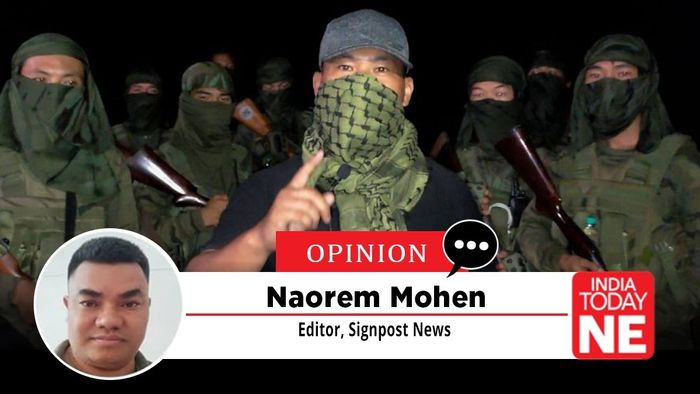
Is “Kuki-Zo Political Groups” (KZPG) truly Manipur's newest political party, or simply a rebranding exercise conceived by a Delhi-based lawyer? The term originates not from grassroots mobilisation but from a private advisory letter dated December 30, 2025, authored by Supreme Court advocate Vishwajeet Singh.
- Jan 02, 2026,
- Updated Jan 02, 2026, 10:43 AM IST
Is “Kuki-Zo Political Groups” (KZPG) truly Manipur's newest political party, or simply a rebranding exercise conceived by a Delhi-based lawyer? The term originates not from grassroots mobilisation but from a private advisory letter dated December 30, 2025, authored by Supreme Court advocate Vishwajeet Singh.
Imagine every Tom, Dick, and Harry taking up arms, extorting money, controlling highways, skimming percentages from local economies, and then sitting at a negotiation table with the government, signing a list of do's and don'ts akin to the Ministry of Home Affairs' (MHA) SoO pacts with Kuki militants.
Would they then qualify as "political armed groups"? This is not just a hypothetical; it's a dangerous precedent that could fracture the nation's fabric, spawning thousands of such groups and eroding the state's monopoly on violence.
Nothing is expected from a legal advisor who openly voices support for demands of a separate administration or Kukiland, which the Prime Minister, Union Home Minister Amit Shah, and other central leaders have repeatedly and firmly rejected as unconstitutional and detrimental to Manipur's territorial integrity.
The latest escalation in advocacy by Kuki supporters which involves pushing for formal political recognition of armed groups through platforms like the "Kuki-Zo Political Groups" is a serious matter. These efforts often include appeals to international organisations, framing the community as a persecuted religious minority and victims of ethnic aggression.
However, this approach raises serious concerns, as it effectively seeks to legitimise Kuki militant outfits—many under the Suspension of Operations (SoO) agreement—by integrating them into political dialogues, potentially normalising armed insurgency in the ongoing Manipur conflict.
Known for representing Kuki interests in court and appearing alongside protesters at Delhi’s Jantar Mantar, the legal advisor of the Kuki CSO urged media to drop labels such as “militants” or “armed undergrounds” for groups under the Suspension of Operations (SoO) agreement. He proposed instead “Kuki-Zo Political Groups” to reflect an alleged shift toward purely political negotiations with the Government of India.
Reality on the ground, however, differs sharply. The armed organisations remain in designated SoO camps, receiving government stipends with no visible urgency to surrender weapons. The advisory seeks to relabel them exclusively as KZPG—a rhetorical shift that prompts a fundamental question: does this mark the emergence of a legitimate political party, or is it merely an attempt by a Delhi lawyer to recast armed groups in political clothing?
The legal advisor's zeal is unmistakable. His advocacy appears driven less by detached legal analysis than by a deep attachment to the Kuki community and anxiety over its future, particularly the prospect of thousands being branded “illegal immigrants” and facing deportation once the National Register of Citizens (NRC) is implemented in Manipur.
Over the years, he has consistently portrayed the Kuki as victims of systemic neglect while assigning blame to other communities in stark terms.This passion generates headlines and debate, yet it also invites scrutiny: is this sound legal strategy or political fantasy cloaked as justice?
The advisory remains his personal opinion as counsel for affected parties, not an official directive from the judiciary or government. No private advocate, however eminent, can bind media terminology or rewrite constitutional realities.
One can appreciate Advocate Vishwajeet Singh's intentions, which evidently stem from a deep concern and perhaps love for the Kuki community. His advocacy in court and public statements reflect a passionate commitment to highlighting grievances and pushing for political dialogue. However, this is undoubtedly his personal view as a lawyer representing affected parties, not an official directive from the judiciary or government.
While well-meaning, no individual—however eminent—stands above the law of the land. An advisory from a private advocate cannot bind media houses or redefine legal realities under the Constitution, which recognizes no such entity as an "armed political groups".
India’s Constitution recognises no entity called an “armed political group.”While the stated intent is to promote dialogue amid Manipur’s protracted ethnic crisis, the proposed semantic overhaul raises serious concerns.
Does it risk whitewashing alleged serious crimes committed by these groups before and during the SoO period? And what precedent does it set when viewed against African cases where rebel factions gained power or impunity through political integration?
Allegations against the SoO signatories include ambushes on security personnel, intra-community clashes causing civilian deaths, widespread extortion, and involvement in drug-related activities in poppy cultivation areas. Security forces have neutralised suspected militants in encounters as well.
The advisory, however, dismisses such history, presenting the groups as harmless to national sovereignty and purely political actors—an approach that overlooks reported violations, including the alleged resurfacing of dormant outfits during recent violence to arm civilians.
Rebranding armed groups as “political” without accountability normalises violence as a route to legitimacy. If entities accused of killings, displacements and reprisals can retain weapons while negotiating stipends and settlements, future proliferation becomes almost inevitable.
The SoO framework, designed as a temporary ceasefire, has faced criticism for permitting violations without consequence. Similar patterns appear in Africa, where stability was prioritised over justice, allowing accused perpetrators to enter politics.
In Somalia, militant factions with violent records have gained legitimacy through political processes, often worsening insecurity. In the Central African Republic, repeated accords since 2007 granted amnesty, integrated rebels into the army, or transformed militias into parties.
Séléka leaders held ministerial posts despite war-crime accusations; anti-balaka militias benefited similarly. Sierra Leone’s 1999 Lomé Accord notoriously offered general amnesty to Revolutionary United Front rebels for atrocities—including amputations, child-soldier recruitment and mass rape—in exchange for power-sharing.These precedents highlight the danger: short-term peace through appeasement frequently perpetuates impunity, sacrifices victims’ justice, and erodes the rule of law.
Does Advocate Vishwajeet Singh recognize these precedents—where hardcore militants in Somalia, CAR, and Sierra Leone were legitimized through political deals—before projecting KZPG as a purely political entity?
Explicitly, the Kuki CSO's Legal Advisor's letter stresses that the groups are neither secessionist nor sovereignty-threatening and calls for responsible journalism. Implicitly, however, demanding the erasure of “militant” descriptors amid unresolved allegations echoes those African amnesties—reframing armed actors to ease dialogue while sidelining past and present crimes.
India’s Constitution and laws offer no such pathway. Insurgency is an internal-security threat; negotiation is pragmatic policy, not constitutional endorsement. Blanket rebranding without prosecution invites a dangerous analogy: criminal syndicates could arm themselves, cite “grievances,” secure SoO-like pacts, and claim political status.
India has consistently rejected separatism, addressing insurgencies in Punjab, Jammu & Kashmir and the Northeast through security operations, development and constitutional integration—never conceding territorial division or armed political legitimacy. Granting retained-armed groups formal platforms risks emboldening similar demands across regions with unresolved ethnic grievances.
More alarmingly, the logic could extend to ordinary criminal networks. Imagine syndicates in Bihar or Uttar Pradesh taking up arms, extorting businesses, controlling highways and infrastructure projects, then negotiating ceasefires, camps, stipends and “political settlement” on grounds of economic or caste marginalisation.
Would they too qualify for rebranding as “political groups”? This is not mere hypothesis; it represents a precedent that could fracture national unity and erode the state’s monopoly on violence.
Political settlements with insurgents occur through executive accords outside the constitutional text. The 1986 Mizo Accord created statehood only after full disarmament and democratic integration.
The SoO is a policy tool—a temporary truce—not a grant of legal personality or party status under the Representation of the People Act, 1951, which demands adherence to unarmed democratic norms.
The Supreme Court has upheld that armed rebellion constitutes sedition under Section 124A IPC unless amnesty follows settlement. Thus the call to rename SoO signatories as KZPG, though perhaps intended to foster dialogue, overreaches by suggesting constitutional legitimacy that does not exist.
The advisory's call to rename Kuki militants under SoO Pact as KZPGs, while well-intentioned for dialogue, oversteps by implying a constitutional legitimacy that doesn't exist.
Imagine applying this precedent to Kashmir: extending comparable political legitimacy and dialogue platforms to militants active along the border would galvanize extremist factions, resurrect calls for azadi or expanded autonomy, reverse significant counter-insurgency achievements post-Article 370 abrogation, and critically jeopardize national security.
Our Constitution provides ample avenues for political expression—elections, assemblies, councils—but none for armed entities. Extending this logic to gangsters would be catastrophic, birthing a nation of mini-fiefdoms where might makes right.
When some Kuki CSO are increasingly serving as mouthpieces for militant groups under the SoO framework, any advisory or unofficial legal notice from their representatives—openly advocating for a separate "Kukiland" or Union Territory—marks a dangerous step toward legitimizing armed political entities, posing a profound threat to India's national security.
If ignored, thousands of groups could arise, from urban slums to rural badlands, each wielding arms as bargaining chips.