Manipur Cannot Wait for Another Village to Empty Before the State Acts
Manipur Indigenous Alliance has appealed to Prime Minister Narendra Modi for a wide-ranging inquiry and urgent protection for Liangmai villages. The memorandum highlights alleged attacks, supply restrictions and the risk of forced displacement
- Oct 21, 2026,
- Updated Oct 21, 2026, 3:41 PM IST
No family should have to abandon its ancestral village before the government takes its safety seriously. People should not have to wait for another house to be burnt, another life to be lost or another desperate appeal for food and medicines before the authorities respond.
However, this is precisely the troubling question raised by the Manipur Indigenous Alliance (MIA) in its latest appeal to the Prime Minister: how long can communities be expected to remain in their ancestral homes when repeated incidents of violence, restrictions on movement and uncertainty over their safety are steadily eroding their confidence in the state's ability to protect them?
The newly formed political party has placed a far-reaching demand before Prime Minister Narendra Modi through a memorandum dated October 19, 2026, seeking an independent, impartial, legally empowered and time-bound commission of inquiry into two centuries of violence against indigenous peoples in Manipur.
Its proposed investigation extends from the colonial period to the present, covering historical attacks on Naga communities, the consequences of the Kuki rebellion of 1917–1919, violence and displacement during the 1990s, the ethnic violence that began on May 3, 2023, and subsequent attacks affecting Naga settlements. Alongside this demand, MIA has raised an urgent concern about the security of Liangmai Naga communities in the Koubru Range, particularly those living in and around Makui and Konshakhul.
The two concerns are connected, but they cannot be addressed on the same timetable. An inquiry into historical violence may help establish responsibility, examine the circumstances in which conflicts developed and identify institutional failures that have remained unresolved for generations.
However, villagers facing threats today cannot be expected to wait for historians, investigators and government officials to complete that exercise. A patient must be able to reach a hospital, food and medicines must reach villages, children must be able to attend school, and families must be able to cultivate their land without fear. None of these responsibilities requires the government to settle two centuries of disputed history first.
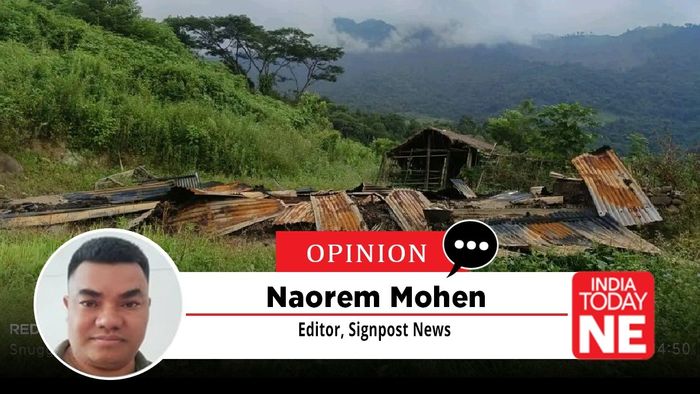
What makes MIA's memorandum particularly significant is the attention it gives to a series of reported attacks on Liangmai Naga settlements during August, September and October 2026. The document refers to an ambush at Makui on August 27, an incident involving arson and armed assaults on September 23–24, an attack reported on October 10 and a further incident on October 14 involving allegations of bombing and gunfire.
It also raises concerns about earlier attacks affecting Tangkhul Naga communities, including incidents in February 2026. These are not presented merely as isolated episodes of violence. MIA wants investigators to examine whether repeated attacks, failures of protection and restrictions on essential supplies have created conditions that could eventually force villagers to abandon their ancestral homes.
These allegations require urgent and independent verification. The memorandum identifies alleged perpetrators and refers to claims involving armed organisations, security personnel and the circumstances surrounding particular attacks. Such accusations cannot be treated as established facts simply because they appear in a political memorandum.
The identities of those responsible, the sequence of events, the evidence available and the conduct of the authorities must be examined through proper investigation. But neither should the seriousness of the allegations become an excuse for administrative silence. When a political party submits detailed accounts of repeated attacks and possible displacement, the government owes the affected communities a response based on what its own inquiries have established.
One of the most disturbing concerns raised by MIA relates to the alleged restrictions on movement and access to essential commodities in the Makui and Konshakhul areas. Its memorandum calls for an examination of whether repeated violence has prevented residents from travelling safely, receiving supplies or continuing their normal lives. If such conditions exist, the question is no longer confined to law and order. It becomes a question of whether citizens can exercise their basic right to live in their own villages without being compelled by fear or deprivation to leave.
Officials should visit the affected settlements, speak directly with residents and make a transparent assessment of the security situation. The public deserves to know whether roads are accessible, whether food and medicines are reaching the villages, what arrangements exist for emergency medical travel and what measures have been introduced following the reported attacks.
These are practical questions that can be answered without waiting for the constitution of another commission. If families have already left their homes, the authorities must establish the circumstances of their displacement and explain what assistance and protection are available for their safe and voluntary return.
There is also a political significance in MIA's decision to place the concerns of Liangmai Naga villages at the centre of its wider appeal. For a newly formed political party, this is an opportunity to demonstrate that its understanding of Manipur extends beyond the communities from which it may draw its principal political support. A party cannot credibly speak about the future of the state while overlooking smaller communities whose numbers may be insufficient to influence an election. The insecurity of a village does not become less important because its people have fewer votes, nor should the protection of ancestral land depend on the political strength of those who inhabit it.
Manipur's smaller indigenous communities have often struggled to make their concerns heard amid larger political and ethnic disputes. Their villages may receive attention only when violence occurs, when residents organise a protest or when an incident becomes serious enough to attract the media.
However, the responsibility of the state does not begin with public outrage. It begins with ensuring that people can continue their ordinary lives without having to seek protection through political influence, public demonstrations or repeated appeals to higher authorities. MIA's intervention will have greater credibility if it continues to engage with the affected communities, documents their experiences carefully and pursues their concerns even after the immediate attention surrounding its memorandum has faded.
The consequences of a village being emptied through fear are rarely understood by those who see displacement primarily as a question of relief camps, compensation and temporary shelter. A village is more than a collection of houses. Its people cultivate land, maintain customary institutions, raise children and preserve relationships built over generations.
When families leave, these connections begin to weaken. Fields remain uncultivated, schools lose pupils and village institutions struggle to function without the people who sustain them. An ancestral settlement cannot simply be recreated somewhere else by providing its displaced residents with temporary accommodation.
This is why MIA's demand for an examination of forced displacement deserves particular attention. The memorandum seeks investigation into whether violence, intimidation, destruction of property or restrictions on essential supplies have been used to compel indigenous communities to abandon their ancestral lands. It also calls for scrutiny of land records, village boundaries, customary institutions and the circumstances preventing displaced residents from returning.
These are matters that require evidence, including testimony from affected families, official records and independent examination of the places concerned. Where unlawful dispossession or coercion is established, protection of land rights and the possibility of safe return must form part of the remedy.
The memorandum goes further by calling for an examination of the activities of armed organisations, the effectiveness of the Suspension of Operations arrangements and allegations concerning cross-border activities and the movement of armed groups. It also seeks scrutiny of the conduct of security personnel, intelligence coordination, deployment decisions and possible failures to respond to warnings before attacks occurred.
There is an important distinction between investigating an attack and examining whether it could have been prevented. The first seeks to establish who committed the offence and how it occurred. The second asks whether warnings were received, whether security arrangements were adequate and whether responsible authorities acted upon information available to them.
MIA's memorandum raises both questions. When a village reports repeated threats, what additional protection is introduced? Are security arrangements reviewed after an incident? Do officials remain in contact with residents who fear another attack? And when violence occurs despite an existing security presence, is there a credible assessment of what went wrong?
These questions deserve answers not only in Makui or Konshakhul but wherever communities in Manipur have experienced repeated insecurity. The government cannot judge its response solely by the number of personnel deployed or the statements issued after an incident. The more meaningful test is whether its actions have prevented further violence and enabled people to continue living in their homes.
MIA's proposal for a historical commission also raises questions that cannot be dismissed. Its memorandum seeks an examination of colonial-era violence, including attacks affecting Naga settlements, and the consequences of the Kuki rebellion of 1917–1919 for neighbouring communities. It calls for scrutiny of displacement during the conflicts of the 1990s and the violence beginning on May 3, 2023, including the circumstances surrounding attacks on Meitei civilians, destruction of property, displacement and subsequent incidents affecting Naga communities.
The document also questions the adequacy of describing the entire conflict simply as an ethnic or communal clash, arguing that such terminology can obscure the experiences of indigenous communities and the consequences of violence for ancestral land and settlement.
The historical claims contained in the memorandum must be examined with the same evidentiary care demanded for contemporary incidents. Accounts of colonial violence, settlement, migration and inter-community conflict are often shaped by competing narratives and collective memories. A credible inquiry cannot begin by accepting one community's historical account as the final explanation of another community's actions.
Nor can responsibility for events committed by particular individuals or armed groups be assigned collectively to their descendants. Historical investigation is valuable when it clarifies what happened, acknowledges suffering and corrects omissions in the public record. It becomes dangerous when the past is used to justify suspicion or hostility against people living today.
There is, however, another question that the Centre must address before deciding whether a new commission is necessary. In June 2023, the Union government constituted a commission of inquiry headed by former Gauhati High Court Chief Justice Ajai Lamba to investigate the violence that began on May 3 that year. Its announced mandate included examining the causes and spread of the violence and possible lapses by responsible authorities or individuals.
MIA's proposed commission would have a considerably wider historical scope, extending to colonial-era incidents and subsequent conflicts. That difference is substantial, but it makes clarification necessary. The government should explain how the proposed inquiry would relate to the commission already constituted, whether their responsibilities would overlap and how evidence gathered through either process would be used.
For affected families, the practical questions are more immediate than the legal distinction between two commissions. Where should victims submit their evidence? Who will protect witnesses from intimidation? Will testimony from smaller communities receive the same consideration as evidence submitted by politically influential groups? What happens when investigators identify possible institutional failures? And will the government act upon findings that may be politically uncomfortable?
MIA has proposed safeguards intended to address some of these concerns. Its memorandum seeks a commission constituted under the Commissions of Inquiry Act, 1952, headed by a retired judge of the Supreme Court or a retired Chief Justice of a High Court, supported by independent experts. It calls for access to official and historical records, powers to summon witnesses, witness protection, interim recommendations and a final report within eighteen months.
The party also proposes a mechanism to examine recommendations and report on their implementation. These provisions deserve consideration because Manipur has little to gain from another inquiry that records suffering, identifies problems and ultimately leaves affected families waiting for meaningful action.
Nevertheless, an inquiry cannot become a substitute for governance. Even a carefully constituted commission with independent members and extensive powers will not provide immediate protection to villagers facing threats today. The responsibility to maintain law and order, investigate criminal offences, ensure access to essential supplies and prevent unlawful displacement already rests with the competent authorities. They do not require another commission to remind them of these duties.
The political importance of MIA's memorandum should therefore be judged not merely by the historical breadth of its demands but by whether it helps bring effective protection to communities whose concerns might otherwise remain unheard. Its allegations must be scrutinised, its interpretation of history can be debated and its proposed institutional arrangements may require legal and administrative examination. But the government's obligation to respond to credible threats against civilians does not depend on accepting every argument advanced by the party.
The first meaningful response to this memorandum should be visible in the villages themselves. Residents should be able to move safely, obtain food and medicines, cultivate their land and send their children to school without fearing another attack. Families who have been displaced should receive the protection and assistance necessary to consider returning voluntarily and safely. Where criminal responsibility is established, the law must take its course, irrespective of the identity or affiliation of those involved. Where failures of administration or security are identified, those failures must be acknowledged and corrected rather than buried beneath another round of assurances.
Manipur has already witnessed the terrible consequences of violence that uproots communities from places where generations of their families have lived. The state cannot afford to treat the possible emptying of another village as an unfortunate development to be addressed only after it happens. Preventing displacement is not merely a humanitarian obligation. It is a fundamental responsibility of government and an essential condition for rebuilding confidence among communities that have endured years of uncertainty.
If another Liangmai family is compelled to leave its ancestral home because it no longer believes protection will arrive, the loss will not be theirs alone. It will represent another failure of the state's responsibility to protect its people.
Manipur cannot wait for another village to empty before that responsibility is taken seriously.
(The views expressed in this article are those of the author and do not necessarily reflect the views of India Today NE or its affiliates)