Manipur University Stands as Torchbearer for Indigenous Games by Organising All India Inter University Thang Ta Competition
Manipur University has once again proven itself as a true guardian and champion of our cultural heritage by taking a bold, visionary step.
- Apr 13, 2026,
- Updated Apr 13, 2026, 2:49 PM IST
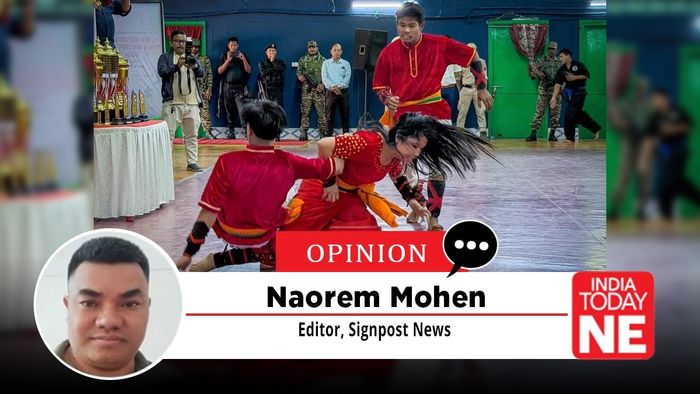
Manipur University has once again proven itself as a true guardian and champion of our cultural heritage by taking a bold, visionary step. By successfully organising the first-ever All India Inter University Thang Ta Competition (Men and Women) 2025-26 from April 6 to 9, the university has not only brought immense pride to Manipur but has also opened a bright new chapter in the recognition and promotion of indigenous games within the national higher education system.
The event was organised under the aegis of the Association of Indian Universities (AIU) and hosted by Manipur University. The University has demonstrated its strong commitment to aligning with the New Education Policy (NEP) 2020, which places special emphasis on the promotion and integration of the Indian Knowledge System (IKS). Thang Ta, as a living embodiment of our traditional martial art and cultural heritage, finds a natural and proud place within this vision of cultural preservation and revival.
Through this initiative, the university has shown that it is striving hard to translate the ideals of NEP into meaningful action on the ground. Furthermore, by hosting this national-level competition, Manipur University has exemplified the best practices expected of Indian universities, making a concrete contribution to the overall commitment outlined in the AIU preamble. It has reinforced the role of higher education institutions in preserving indigenous knowledge while fostering national integration through sports and culture.
The event, held at the Dr Kamal Indoor Stadium in Canchipur, concluded with resounding success. Manipur University emerged as the overall champions in the men’s category with a commanding performance of 9 gold, 4 silver, and 2 bronze medals. In the women’s section, Manipur University of Culture claimed the championship with 8 gold, 2 silver, and 4 bronze medals. Manipur University of Culture finished as runners-up in the men’s category with 5 gold, 7 silver, and 8 bronze, while National Sports University, Imphal, secured the runners-up position in the women’s category with 3 gold, 3 silver, and 2 bronze.
Nearly 300 participants, including athletes and officials from 28 universities across the country, took part in this historic gathering. The impressive list of participating institutions reflected a genuine national spirit — from host Manipur University and Manipur University of Culture to National Sports University Imphal, Dhanamanjuri University, Kota University, Apex University, Sher-e-Kashmir University of Agricultural Sciences and Technology, Tamil Nadu Physical Education and Sports University, Dr KN Modi University, ICFAI University Tripura, Shridhar University Rajasthan, Gauhati University, University of Patanjali, and several others from different corners of India.
Young talents from distant states came together to compete, showcasing exceptional skill, discipline, and profound respect for Thang Ta — the traditional Meitei martial art that carries the very soul of our people. Their enthusiastic participation proved that when provided the right platform, the power and beauty of Thang Ta can travel far beyond the hills and valleys of Manipur and resonate across the nation.
Manipur University has clearly established itself as a torchbearer for indigenous games. Thang Ta is far more than a sport of swords and spears. It is an integral part of the Meitei lifeworld, embodying values of courage, balance, harmony with nature, and deep spiritual discipline. By integrating this ancient martial art into the formal arena of inter-university sports, the university has ensured that the knowledge and skills carefully passed down by our forefathers continue to live, breathe, and flourish among the youth of today.
This initiative beautifully strengthens the bond between education and culture. It reminds every student that academic excellence and cultural rootedness can walk hand in hand through the practice of Thang Ta. The resounding success of the competition has filled the hearts of Manipuris with fresh hope and pride. There is now a growing expectation that Manipur University will continue to lead by creating similar platforms for other indigenous sports as well as for traditional folk arts, oral literature, ecological knowledge, and community practices that have sustained our society for generations.
Such meaningful steps would greatly enrich the learning environment, helping students develop a strong sense of identity and pride in their heritage while preparing them to face the modern world with confidence and grace.
Vice Chancellor Professor Naorem Lokendra and the entire organising committee deserve heartfelt appreciation for their dedicated leadership and tireless efforts that made this four-day event a grand success. The Department of Sports, particularly Assistant Director Dr Ch Pradeep, played a pivotal role by writing to the Association of Indian Universities and the University Sports Directorate in New Delhi on February 18, which paved the way for wide national participation. The overwhelming and positive response from universities across India clearly reflects the rising interest in Thang Ta at the national level and has added significant prestige to the competition.
We must also remember the painful yet resilient history of Thang Ta with deep respect. Following the fall of the Manipur Kingdom to the British Empire in 1891, this martial art faced an official ban as the colonial power viewed it as a threat. Yet our ancestors kept the tradition alive in secret through empty-hand techniques and disguised movements, known as Sharit Sharak.
Royal chronicles like Cheitharol Kumbaba record that around 250 well-trained Thang Ta warriors served in the British forces during the First World War. Upon their safe return, the Maharaja of Manipur welcomed them with a grand and emotional ceremony honouring their bravery and loyalty.
In 1934, the Maharaja took a visionary step by convening a meeting under the Manipuri Nikhil Hindu Mahasabha. Resolution number eight called for formal training in Thang Ta and Mukna under experienced teachers so that the younger generation could learn these arts properly. Rajkumar Sanatomba and Rajkumar Sanahal Singh answered this call with dedication, introducing the practice as “Satjal” to suit the changing times.
Two decades later, in 1952, C.C. Higher Secondary School in Imphal became the first institution to include Satjal as a regular subject in its curriculum — marking a significant moment when traditional knowledge began finding its place in formal education.
Today, after seven decades, Manipur University has now proudly joined this long and illustrious line of torchbearers by hosting the first All India Inter University Thang Ta Championship. The university has demonstrated that higher education institutions can play a powerful and transformative role in cultural revival.
When universities take up such noble causes, they create meaningful spaces where tradition meets modernity — where young minds learn not only from books and theories but also the deeper lessons of discipline, respect, and identity that spring from their own soil through the practice of Thang Ta.
Every Manipuri heart feels a deep sense of gratitude towards Manipur University for this sincere and concrete effort. The university has taken real action to ensure that one of the most vital elements of our cultural identity does not slip into oblivion. Instead, Thang Ta is gaining new strength, visibility, and recognition on the national stage. Parents, teachers, elders, and young athletes alike can now look forward to a brighter future for indigenous games like Thang Ta.
The success of this competition sends a powerful message that our heritage is worthy of both pride and active protection. It encourages families to support their children in learning Thang Ta and motivates other educational institutions to follow the inspiring example set by Manipur University.
Looking ahead, the path is wide open for even greater progress. Manipur University can further expand its vision by introducing regular training programmes, workshops, and certificate courses in Thang Ta and related indigenous practices. Closer collaboration with traditional masters, experienced gurus, and cultural organisations would bring greater authenticity and depth to these initiatives.
Students from other states who participated have already carried back heartwarming stories of the excellence and warmth they experienced in Manipur. Such cultural exchanges build bridges and spread awareness about the unique richness of our land through Thang Ta.
In a world where globalisation often pushes smaller cultures to the margins, initiatives like this All India Inter University Thang Ta Competition serve as strong anchors of identity and powerful sources of inspiration. They remind us that true progress does not mean forgetting the past, but building wisely upon it with care and wisdom.
Manipur University has shown that it deeply understands this balance and stands ready to guide its students along this path through the enduring spirit of Thang Ta. The active participation of university students in competitive sports like Thang Ta generates a spirit of healthy competition that extends into daily life as well. It is, therefore, necessary that the youth of universities across the country are brought together on a national platform through the medium of sports and physical activities. This helps channelise their youthful energy into constructive directions and serves as a powerful process of nation building.
As the echoes of cheering crowds and clashing swords fade from the Dr Kamal Indoor Stadium, the real and lasting impact of this competition is only beginning to take root — in the minds and hearts of the participants, students, and the wider community. Manipur University has written a memorable and proud page in the history of indigenous sports promotion. Its commitment shines as a shining example for other universities in the region and beyond.
Every citizen who values the soul of Manipur should extend warm congratulations and continued support to Manipur University for this outstanding achievement. The first All India Inter University Thang Ta Competition has not only crowned champions on the field but has also kindled a bright flame of cultural pride that will illuminate the path for future generations.
May this spirit of preservation and promotion of Thang Ta grow stronger with each passing year, so that the rich traditions of our land continue to inspire and empower the youth in their journey towards a bright and deeply rooted future.