Meitei IDPs aid Tangkhul victims from Litan despite their own agony
Meitei IDPs have extended aid to Tangkhul victims in Litan despite their own challenges. This gesture highlights strong community solidarity amid conflict in Manipur
- Feb 13, 2026,
- Updated Feb 13, 2026, 5:45 PM IST
This heartwarming yet profoundly painful act at the Langol Leima Khullen Relief Camp strikes at the very heart of Manipur's ongoing tragedy, and offers a fragile glimpse of what healing could look like.
In a state scarred by ethnic violence since May 3, 2023, with over 300 lives lost, more than 70,000 displaced, and communities fractured along deep lines, genuine cross-ethnic solidarity feels both miraculous and desperately needed.
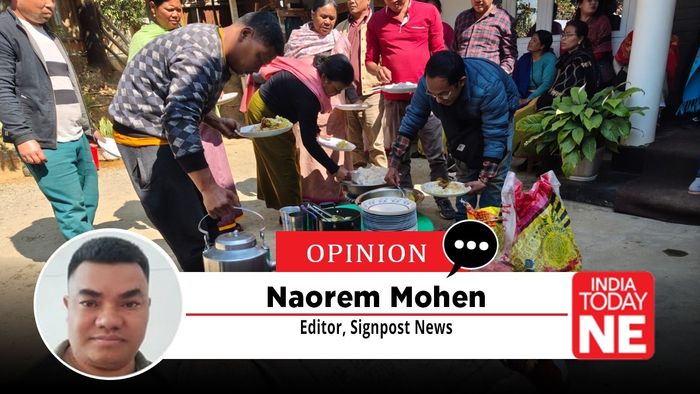
Here it is, the Churachandpur Meitei United Committee (CMUC), working alongside the Tomching Chingsang Organisation, stepped up to deliver vital relief materials, like rations, vegetables, and essentials to Tangkhul families displaced from Litan in Ukhrul district, whose homes were gutted in the recent clashes.
The violence in Litan Sareikhong and surrounding areas ignited around February 7-8, 2026, and escalated rapidly into arson, gunfire, and retaliatory attacks between the Tangkhul and Kuki communities. During five days, dozens of houses, estimates around 70, with many belonging to Tangkhuls, were reduced to ashes.
Security forces struggled to contain the flames as gunfire forced firefighters to retreat, curfews were imposed, and internet services were suspended across Ukhrul, Kamjong and Kangpokpi districts to stem rumours and further escalation. Families fled in panic, seeking shelter wherever they could.
One of the most heartbreaking stories from this chaos is that of Khanringpam Vashum, the headman of Litan Village. Coronated just over a year ago, he was a respected leader who emphasised that his village had stayed out of the initial dispute in nearby Sareikhong.
However, on the night of February 8, around 10:30 pm, unidentified assailants, described in accounts as Kuki miscreants, attacked his home while the family slept. Petrol bombs were thrown, indiscriminate firing erupted, and the house was completely destroyed along with vehicles, a motorbike, and personal belongings.
Vashum's family barely escaped through a river path to safety in Ukhrul town; his elderly mother and sister were injured in the frantic flight. "I never imagined that we would be attacked, because we were never part of the conflict," he said, his words laced with shock and sorrow. "Why do they target us?"
Left homeless, grieving, and bewildered, the headman now embodies the indiscriminate suffering this violence inflicts even on those trying to remain neutral.
Into this fresh wound stepped the Meitei IDPs staying at Langol Leima Khullen Relief Camp. The Churachandpur Meitei United Committee (CMUC) convenor Naba Ningthoujam knows this pain intimately. He is himself an internally displaced person from Churachandpur, uprooted by the 2023 violence that shattered so many lives.
His own home gone, his days filled with the relentless grind of camp existence, meagre rations, health concerns, children without school, elders without comfort, he feels the Tangkhul community's agony as his own. Their houses burnt, families scattered, futures erased, it's the same nightmare he endures daily.
That shared trauma propelled him and others to act. They pooled what little they had, rations from their limited supplies, and vegetables gathered through sheer determination and sent aid to those now suffering due to clashes in Litan.
This isn't generosity from plenty; it's compassion forged in shared scarcity. Meitei IDPs at relief camps like Langol Leima Khullen face immense hardships. Overcrowded shelters, ongoing shortages, repeated protests for rehabilitation, unfulfilled government promises on dignity, livelihoods, and education.
Many, including Naba, have spoken of exhaustion and impatience with slow official responses. Yet amid their own struggles, they chose outreach over isolation.
South Lungshang village authority treasurer Shangnaorang Ningshen responded with profound gratitude, thanking the Meitei community for their hospitality and reaffirming the deep, age-old bond between Meitei and Tangkhul peoples as blood brothers, rooted in shared history, intermarriages, cultural ties, and mutual respect that violence has tried, but failed, to erase.
Manipur's conflicts are layered and painful. The 2023 crisis pitted Meiteis against Kukis and others; now, new rifts emerge in the hills between Tangkhuls and Kukis, as seen in Litan. Displacement compounds everywhere, Tangkhuls from Litan join the ranks of IDPs already enduring the same uncertainties as Meiteis from Churachandpur or Kukis in other areas.
Suffering knows no ethnic hierarchy; the loss of home, security, and normalcy is universal. This gesture from Meitei IDPs at Langol Leima Khullen proves empathy can cut through those divisions. When one IDP sees another's identical wound, not as "the other's" but as a reflection of their own, something fundamental shifts.
Naba's candid admission—"I myself being an IDP... feel the pains"—is raw and real. It transforms pain from a divider into a connector. True peace won't arrive through endless inquiries, military presence, or administrative suspensions alone.
When the authorities have faltered, rehabilitation lags, accountability remains elusive, and camps persist for years on. Healing must start from the ground up. Through mutual recognition of grief, without deflection or whataboutism.
This act points the way: joint relief, shared stories, collaborative advocacy. Imagine more such bridges, cross-cultural support, dialogue forums, and youth initiatives to rebuild trust. Small, yes—but potent.
History affirms it that reconciliation in places like South Africa and Rwanda began with acknowledging shared pain. This moment isn't an anomaly; it's inspiration. Meitei IDPs aiding Tangkhul victims amid Litan's ruins reaffirms enduring brotherhood beneath the scars.
A United Manipur isn't naive idealism; it's essential for survival. Perpetual division invites economic ruin, lost generations, and deepened hate. Unity offers hope: revived economy, secure futures, healing across lines. The aid from Langol wasn't vast in scale, but its spirit is immense.
It declares, our agony doesn't blind us to yours; it sharpens our sight. Let's amplify these stories, replicate this kindness. When IDPs truly feel each other's pain and respond, barriers fall.
Peace emerges not from force, but from hearts that understand: we are all displaced, all grieving, all brothers in need.