National Highways Are Not the Property of COTU, They Cannot Dictate Who Travels or Who Does Not
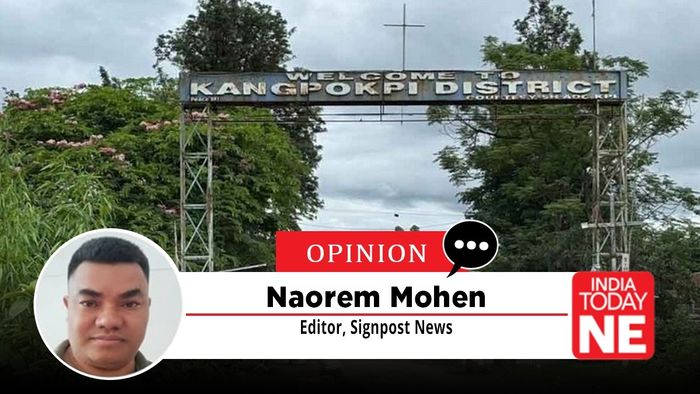
National highways are public infrastructure, funded by taxpayers and meant for all citizens, not fiefdoms to be controlled by self-appointed gatekeepers like COTU. Their warning to halt Malem Thongam's cycling route through Kangpokpi district—a key area in the hills—is nothing short of authoritarian overreach, but it's just the tip of the iceberg.
- Dec 21, 2025,
- Updated Dec 21, 2025, 6:41 PM IST
National highways are public infrastructure, funded by taxpayers and meant for all citizens, not fiefdoms to be controlled by self-appointed gatekeepers like COTU. Their warning to halt Malem Thongam's cycling route through Kangpokpi district—a key area in the hills—is nothing short of authoritarian overreach, but it's just the tip of the iceberg.
The Committee on Tribal Unity (COTU), a Kuki CSO has once again revealed its true colors—not just through their heavy-handed diktat against peace activist Malem Thongam and his "Cycling for Manipur Peace" initiative, but now in a brazen challenge to the Union government's direct orders.
Challenging COTU's obstructive diktat, transgender peace activist Malem Thongam successfully completed her inspiring journey from Delhi's Qutub Minar to Imphal on December 19, 2025, after a grueling 77-day, over 3000-kilometer cycle rally for Manipur's peace.
In a resounding affirmation that national highways cannot be held hostage by ethnic divisions, the National Human Rights Commission (NHRC) has issued a strongly worded order underscoring the grave human rights implications of the ongoing restrictions on National Highway-2 in Kangpokpi district.
In Case No. 29/14/16/2025, dated December 11, 2025, the Commission—taking cognizance of persistent complaints about denial of safe passage and de facto blockades—has directed the District Magistrate and Superintendent of Police of Kangpokpi to conduct a fresh, thorough inquiry and submit a comprehensive action-taken report by January 4, 2026.
This intervention serves as a sharp rebuke to organization like COTU enforcing ethnic fault lines on public infrastructure, reinforcing that no group can unilaterally obstruct the constitutional right to free movement and imperil the livelihoods, healthcare, and essential supplies of ordinary citizens across Manipur.
On March 1, 2025, Union Home Minister Amit Shah chaired a high-level meeting in Delhi, attended by Governor Ajay Kumar Bhalla, Union Home Secretary Govind Mohan, Director of Intelligence Bureau Tapan Deka, Deputy Chief of Army Staff, and the Commander of the Army's Eastern Command, among others. Amit Shah issued a clear directive: ensure free movement of people on all national highways and roads in Manipur starting March 8, 2025.
This was a vital step toward restoring normalcy in a state crippled by blockades and violence. But COTU, in their infinite arrogance, has chosen to defy this mandate with an eight-point declaration that reeks of separatism and sabotage, exposing their anti-peace agenda and highlighting how such organizations are derailing any hope for genuine harmony in the region, all while exploiting the plight of internally displaced persons to push their divisive demands.
Their eight-point declaration, issued during the 22nd Remembrance Day observance in Phaijang, Kangpokpi district, is a blatant defiance of India’s constitutional framework and an open challenge to the Union government’s efforts to restore peace. While democratic rights allow every individual and group to express their demands, such demands must remain within the legal and constitutional boundaries of India.
However, COTU’s declaration not only oversteps these boundaries but also poses a grave threat to the security and sovereignty of the nation. By asserting that their demand for a "Separate Administration" for the Kuki community is "non-negotiable" and rejecting any government-imposed peace initiatives unless their conditions are met, they set a dangerous precedent.
Most alarmingly, they've imposed self-restrictions on the free movement of people within Kuki dominated areas until their separatist goals are achieved. This directly violates Article 19(d) of the Indian Constitution, which guarantees every citizen the right to move freely throughout the territory of India.
By unilaterally enforcing territorial restrictions and blockades, COTU is not just defying the government but effectively functioning as a parallel authority, undermining the integrity of the Indian state. This stands in stark contradiction to Amit Shah’s directive, which aimed to guarantee the free flow of people and goods across Manipur to foster normalcy and rebuild trust.
Allowing such actions to go unchecked will only encourage other separatist or insurgent groups to impose similar restrictions in their respective regions, leading to widespread chaos and lawlessness.
Why does the state tolerate the repeated use of terms like "buffer zones" that officially do not exist? If a group repeatedly claimed independence from India—demanding full separation—would that be dismissed with a shrug and a "let them speak as they wish"?
Sensitive and provocative statements from organizations like COTU cannot be met with state complacency. Even though no official buffer zone exists, their repeated assertions create a de facto situation on the ground, sowing confusion and fear.
The Presidential Rule governance owes the people of Manipur an official statement to dispel these shadows and reaffirm its commitment to unity.This incident with Malem Thongam, combined with their broader defiance, is emblematic of COTU's strategy to derail peace efforts.
In a firm assertion of the balance between the right to protest and public convenience during the 2020-2021 farmers' agitation against the three farm laws, the Supreme Court of India repeatedly emphasized that while farmers have a constitutional right to peaceful demonstration—even on issues pending before the court—they cannot block national highways or public roads indefinitely.
Observing that "roads cannot be blocked perpetually" and that such obstructions cause grave hardship to commuters in the Delhi-NCR region, the apex court, drawing from its Shaheen Bagh judgment, ruled that no group can indefinitely occupy public ways, as this infringes on citizens' fundamental right to free movement, underscoring that protests must be confined to designated areas without paralyzing essential infrastructure.
In 2023, a landmark observation reinforcing the sanctity of national highways as vital public arteries was confirmed. The Tripura High Court has ruled that any blockade through assemblies or gatherings constitutes a direct violation of Section 8B of the National Highways Act, 1956, thereby stripping perpetrators of any claimed immunity under the fundamental rights to freedom of speech and assembly guaranteed by Articles 19(1)(a) and 19(1)(b) of the Constitution—rights that are, after all, subject to reasonable restrictions.
This unequivocal stance sends a powerful message: no group, regardless of its grievances, can cloak obstructionist tactics in the garb of constitutional protections when they blatantly disrupt free movement and endanger public welfare on infrastructure meant for all citizens.
Their infamous stance of "No Peace Before Separation" is a direct challenge to India's constitutional framework, prioritizing ethnic balkanization over dialogue and coexistence. While the Manipur crisis stems from deep-rooted issues like land rights, reservation policies, and historical grievances, COTU's tactics—issuing ultimatums, organizing shutdowns, and leveraging IDPs as bargaining chips—do little to address these root causes.
Instead, they weaponize the suffering of the displaced, portraying them as pawns in a game of territorial demands. Reports from the ground highlight how IDP camps have become hotbeds for political mobilization, where vulnerable families are pressured into supporting separatist narratives rather than focusing on rehabilitation and return.
Common people in Manipur, those weary souls who yearn for normalcy and the ability to work, travel, and live without fear, must not be swayed by such divisive agendas. Peace isn't achieved through exclusion or threats; it's built on inclusive actions like Malem Thongam's cycling mission, which seeks to bridge communities through non-violent symbolism.
By contrast, COTU's actions expose their hypocrisy: they cry foul over alleged aggressions while actively sabotaging reconciliation, including flouting the Home Minister's orders.
If COTU truly cared for the Kuki people, they would advocate for mediated talks, not roadblocks that hinder even symbolic gestures of unity or essential movements mandated by the Union government.
It's high time for the authorities—both state and central—to rein in such outfits and ensure that national highways remain open to all, free from ethnic vetoes and unconstitutional restrictions.
Despite COTU's vehement warnings and threats to block her route, Thongam crossed the sensitive Kangpokpi district safely—albeit under heavy security convoy—and arrived in Imphal to a hero's welcome from thousands, including civil society groups at Kangla and Ima Keithel.
This triumphant passage, facilitated by central forces and met with no major incidents, demonstrates that the people on the ground largely denounced COTU's divisive threats, prioritizing unity over intimidation.
It is high time the administration firmly reins in such organizations that seek to divide communities and sow fear. National highways are not their private property—they belong to all Indians.
Furthermore, the Public Interest Litigation and National Human Rights Commission, challenging restrictions on free movement along key highways must be expeditiously heard and acted upon, dismantling any de facto barriers.