One-Sided Peace: Why CM Yumnam Khemchand’s Outreach Is Falling on Deaf Ears Among Kukis
As a leader who has shown a unique willingness to reach across the divide — crossing security zones with substantial security personnel, engaging directly with Kuki civil society organisations (CSOs), MLAs, and even common citizens in the hills — his personal and bold approach stands out.
- Apr 13, 2026,
- Updated Apr 13, 2026, 6:10 PM IST
After the shocking incident of Tronglaobi in Bishnupur district, Chief Minister Yumnam Khemchand Singh's proactive peace initiatives have come under intense scrutiny. As a leader who has shown a unique willingness to reach across the divide — crossing security zones with substantial security personnel, engaging directly with Kuki civil society organisations (CSOs), MLAs, and even common citizens in the hills — his personal and bold approach stands out.
However, after nearly two months in power, these goodwill gestures appear to be falling on deaf ears, raising serious questions about the effectiveness of one-sided peace efforts in a conflict marked by deep mistrust and selective responses.
One must ask with a heavy heart: how effective can one-sided peace initiatives be when the other side remains largely unresponsive, or worse, continues to escalate tensions? The metaphor is poignant — when Kuki militants have reportedly spread networks of bombs and booby traps across the hills, how can the “peace pigeon” safely reach its destination? Peace-building cannot be a unilateral exercise. It requires reciprocity, mutual goodwill, and at the very least, basic human gestures of empathy even amid political differences.
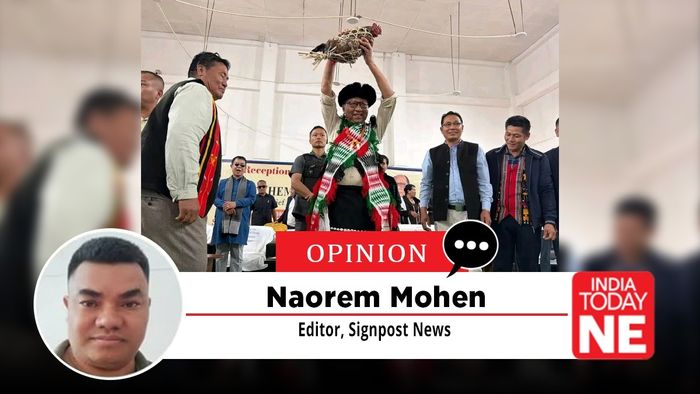
CM Y Khemchand’s uniqueness lies in his apparent fearlessness and readiness to do what he believes is necessary. He has undertaken multiple high-risk engagements: two visits to Jiribam, meetings with Hmar leaders, the Kuki-Zo Council gathering in Guwahati, and a recent outreach in Senapati where he held private discussions with Saitu MLA Haokholet Kipgen at the latter’s residence in Henbung.
These steps demonstrate a determination to foster dialogue in a state torn by insurgency and ethnic mistrust. Though, he has carried substantial security personnel during these crossings, which some view not merely as protection but as a subtle assertion of state authority in areas where normal governance has been challenged.
However, the results on the ground remain deeply disheartening. Violence has not subsided. Firing continues unabated in areas like Litan. The horrific RPG attack on April 7, in Tronglaobi has claimed the lives of two innocent children and injured the wife of BSF personnel. Then the subsequent indiscriminate firing that led to the deaths of three more Meitei civilians — people already mourning the slain children — only deepened the tragedy.
These incidents represent shattered families and a growing sense of impunity that continues to haunt the state. In such a delicate and emotionally charged atmosphere, it is reasonable to expect some basic gesture of humanity from Kuki MLAs and civil society organisations with whom the Chief Minister has been engaging.
At the very least, a public condemnation of the killing of innocent children, or an expression of condolences to the grieving families, would have been a minimal step toward de-escalation and restoring faith in the peace process. Regrettably, no such statements have emerged prominently from the Kuki side. The silence is deafening and deeply disappointing.
If Kuki CSOs like the ITLF claim that the April 7 attack in Tronglaobi was not carried out by Kuki militants, then the bare minimum expected from them is a clear and unequivocal condemnation of the barbaric act that resulted in the slaughter of two innocent children and the injury of a BSF jawan’s wife. Denying involvement should not translate into complete silence or moral detachment from the horror.
On the contrary, these very organisations have been quick to condemn the death of the martyred BSF jawan in Litan on April 7. This selective outrage reveals a disturbing double standard and outright hypocrisy. When innocent children are killed by RPGs in cold blood, the absence of any word of sympathy or condemnation from Kuki civil society bodies raises serious questions about their commitment to peace and basic humanity.
True peace brokers cannot afford to pick and choose which victims deserve mourning. Even more telling was the absence of any Kuki MLAs, including Deputy Chief Minister Nemcha Kipgen, at the recent state event in Senapati on April 7 where several developmental projects were inaugurated.
This was not a partisan gathering but an official function of the Manipur Government. The boycott — whether deliberate or not — sends a troubling message about the willingness of certain elected representatives to work under the collective banner of the state.
That the Chief Minister had to meet Haokholet Kipgen privately at his home rather than in an open, institutional setting only exposes the persistent trust deficit. It is becoming increasingly evident that Chief Minister Yumnam Khemchand’s current peace mission requires a fundamental shift in strategy.
No one on the other side appears to be listening to his repeated calls for a “forget and forgive” mantra. Goodwill gestures and outreach efforts have been met with either silence, boycott, or continued hostility. In such a scenario, an iron hand is now needed to firmly punish those elements who are deliberately trying to derail the peace process.
Since he now supposedly heads the Unified Command structure, CM Y Khemchand possesses immense institutional power and operational authority to crack down decisively on hostile militants, anti-social elements, and any parallel power structures operating in the hills.
Peace can truly become an effective weapon only when wielded by a stronger and more assertive leader. A weak leader endlessly shouting for peace without backing it with decisive action risks turning the entire exercise into a mere mockery that emboldens the disruptors rather than deterring them.
Chief Minister Khemchand must now place greater trust in the Meitei and Naga civil society organisations that have consistently shown readiness for dialogue and peace. When one door remains firmly closed and resistant to genuine reconciliation, there is little wisdom in trying to force it open through repeated unilateral efforts.
Instead, he should turn toward the other doors that are already open and willing to walk the path of peace. Working closely with Meitei and Naga CSOs can provide a more balanced and inclusive platform for healing, ensuring that peace-building is not perceived as skewed toward any single community. Appeasement of one side at the cost of ignoring the pain and expectations of others will ultimately weaken, rather than strengthen, his peace mission.
Meanwhile, the Chief Minister’s failure to show the basic courtesy of personally meeting the families of the five victims of the Tronglaobi tragedy has only added to the sense of alienation among Meitei communities. Was his pursuit of peace requiring him to stay away from his own people? Such gestures matter deeply in a wounded society.
The critical question persists: with whom exactly should CM Yumnam Khemchand engage to bring about meaningful and lasting peace?
Before sending any more peace pigeons into the hills, Chief Minister Yumnam Khemchand must first wipe the tears of the grieving mothers and wives whose husbands and children were brutally killed on April 7 in Tronglaobi. He owes it to these bereaved families to stand with them in their hour of unimaginable pain and loss.
Only after addressing this human tragedy with empathy and visible solidarity can he realistically decide his future course of action — whether to continue extending olive branches toward those who show no reciprocity, or to deploy the brute force of the state against the elements actively derailing peace initiatives. Prioritizing the victims of his own community is not just a moral duty; it is a political necessity that will determine whether his leadership is seen as balanced or biased.
Rumours now suggest that CM Y Khemchand may soon visit Churachandpur and Tengnoupal. One can only hope that these journeys yield tangible breakthroughs rather than further disappointment.
For true peace to take root, it is imperative that Kuki civil society organisations and their elected representatives move beyond rhetoric and demonstrate concrete steps — starting with unequivocal condemnation of violence against innocents, irrespective of community, and a willingness to engage in dialogue without preconditions or parallel power structures.
Manipur has suffered enough. The people — Meitei, Kuki, Naga, and others — deserve leaders who prioritize healing over hardening of positions. If the current Chief Minister’s bold outreach continues to meet with silence or hostility, the time may come to reassess the strategy.
Peace cannot be begged indefinitely; it must be built on mutual respect, accountability, and the shared desire to protect innocent lives. Until the other side shows a genuine willingness to walk even a few steps toward the middle, the hills will remain difficult terrain for any peace dove to navigate safely.
The Chief Minister’s courage is commendable, but courage alone cannot substitute for reciprocity. The ball, as they say, now lies firmly in the court of Kuki CSOs and MLAs. The question is whether they will choose dialogue and humanity, or allow the cycle of mistrust and violence to persist.