Racism vs. BAFTA Pride: The Northeast Wake-Up Call India Needs
In the span of just days in February 2026, India witnessed two profoundly contrasting stories from its Northeast. On one side, a Manipuri-language film Boong, directed by Lakshmipriya Devi and backed by Farhan Akhtar, stunned the world by winning the BAFTA Award for Best Children's & Family Film, beating out Disney giants like Zootopia 2 and Lilo & Stitch.
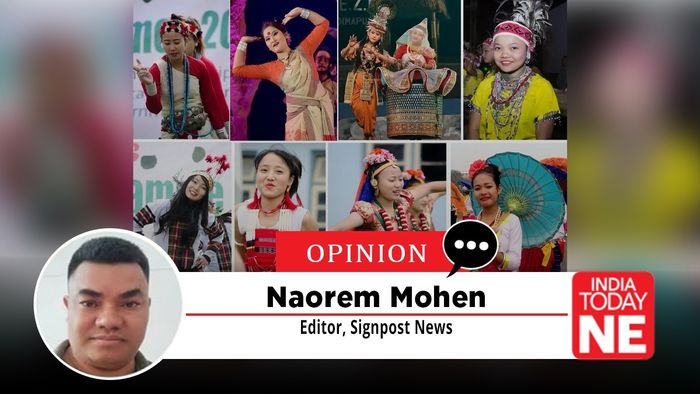
- Feb 24, 2026,
- Updated Feb 24, 2026, 3:11 PM IST
In the span of just days in February 2026, India witnessed two profoundly contrasting stories from its Northeast. On one side, a Manipuri-language film Boong, directed by Lakshmipriya Devi and backed by Farhan Akhtar, stunned the world by winning the BAFTA Award for Best Children's & Family Film, beating out Disney giants like Zootopia 2 and Lilo & Stitch.
This historic triumph, the first for any Indian film in the category, brought global acclaim, emotional celebrations across Manipur, and a heartfelt plea from Lakshmipriya Devi for peace amid her homeland's challenges.
On the other side, three young women from Arunachal Pradesh in Delhi's Malviya Nagar endured vicious racial slurs and humiliation from neighbors over a trivial dispute about dust from air conditioner installation—accused of being "sex workers," "massage parlour" operators, "dhandhewali," and mocked as "momo sellers."
An FIR was filed under the Bharatiya Nyaya Sanhita for criminal intimidation, outraging modesty, and promoting enmity on racial grounds, yet the accused initially remained absconding, prompting outrage from Arunachal CM Pema Khandu, Meghalaya CM Conrad K. Sangma, former CM N Biren Singh, Manipur MP Angomcha Bimol Akoijam and Northeast advocacy groups.
This isn't mere coincidence; it's a glaring indictment of how ignorance and prejudice persist even as the region delivers pride to the nation.
For decades, efforts toward national integration have flowed one way: security forces like the Indian Army and Assam Rifles organize National Integration Tours (NITs), bringing youth and leaders from Northeast states, Manipur, Arunachal Pradesh, Nagaland, Meghalaya, Mizoram, Tripura, Assam, and Sikkim to experience mainland India's diversity, history, industry, and governance.
Recent tours, such as those in February 2026 for participants from Manipur's Tengnoupal, Chandel, and Kakching districts visiting Dimapur, Kohima, Guwahati, and Shillong, promote civil-military ties and shared nationhood.
These are valuable, but true unity requires reciprocity.The rest of India, particularly students in schools across metros and heartland states remains dangerously unaware of the Northeast's realities. This ignorance sustains stereotypes, turning fellow citizens into caricatures: "narrow eyes," "momo sellers," or "exotic tribals."
Without mandatory education on the region's over 200 languages, indigenous traditions, festivals, biodiversity hotspots like the Eastern Himalayas, historical roles in India's freedom struggle and WWII battles (Imphal-Kohima), and immense contributions, "othering" continues unchecked.
Those who have visited or lived in the Northeast return transformed. They marvel at mist-covered hills, Meghalaya's living root bridges, Manipur's serene Loktak Lake, Nagaland's vibrant Hornbill Festival, and Arunachal's pristine biodiversity. They cherish the legendary hospitality, warm welcomes, shared meals, genuine care that makes strangers feel like family.
Above all, they witness the profound patriotism: Northeastern communities guard India's sensitive frontiers with unmatched dedication, enlisting disproportionately in the armed forces (the Assam Rifle's legacy), serving vigilantly despite facing daily humiliation and discrimination elsewhere.
Viral images of Arunachal children saluting army convoys capture a loyalty that endures prejudice, yet it often remains unseen and unappreciated.The Malviya Nagar incident where a minor repair dispute escalated into targeted racial venom exemplifies a recurring pattern of harassment in Delhi, Gurugram, and other cities: housing bias, slurs, violence, even fatal attacks against Northeast migrants.
Contrast this with national celebration over Boong's BAFTA win, which spotlighted Manipur's stories of resilience amid conflict. Northeast Indians serve bravely in defense, dominate in sports, enrich culture with music and dance, and now claim global cinematic honors.
The Northeast of India has consistently produced extraordinary sports icons and creative talents who have not only elevated the region's profile but also brought immense pride and glory to the entire nation through their grit, talent, and groundbreaking achievements.
In football, legends like Bhaichung Bhutia from Sikkim revolutionized the sport in India—he became the first Indian footballer to play professionally in Europe (with Bury FC in England), captained the national team for over a decade, scored crucial goals in international tournaments, and earned the nickname "Sikkimese Sniper" for his lethal finishing. His legacy inspired generations and helped popularize football across the country.
In women's football, Oinam Bembem Devi from Manipur stands as a pioneering figure—she captained the Indian women's team multiple times, including in major tournaments like the AFC Cup and SAFF Championships, won numerous national titles, and later transitioned into coaching and management, earning the prestigious Arjuna Award in 2017 for her contributions to the sport.
In combat sports, Mary Kom (Mangte Chungneijang Mary Kom) from Manipur is a living legend—a six-time World Amateur Boxing Champion, the only woman to achieve this feat, and an Olympic bronze medalist (London 2012). Her journey from humble beginnings to global stardom, overcoming societal barriers and multiple motherhoods while competing at the highest level, has inspired millions, including through the biopic film starring Priyanka Chopra.
Fellow Manipuri boxer Sarjubala Devi followed in her footsteps, winning gold at the Youth World Championships, multiple national titles, representing India at the Rio 2016 Olympics, and later turning professional—proving the depth of boxing talent from the state.
In weightlifting, Saikhom Mirabai Chanu from Manipur has become a national icon with her silver medal at the Tokyo 2020 Olympics, gold at the Birmingham 2022 Commonwealth Games (where she set records), and multiple world championship medals, showcasing unbreakable determination and lifting India's spirits on the global stage.
Beyond sports, filmmaker Rima Das from Assam has redefined independent Indian cinema with her authentic, self-made approach—often handling writing, directing, producing, cinematography, and editing herself.
Rima's breakthrough film Village Rockstars (2017) premiered at Toronto International Film Festival, won India's National Film Awards for Best Feature Film and Best Editor (making it only the second Assamese film to receive such honors), became India's official entry to the Oscars in 2019, and earned over 50 international awards while grossing significantly in Assam on a shoestring budget.
Follow-ups like Bulbul Can Sing (2018) received a Special Mention at Berlinale's Generation 14plus section, and more recent works such as Not A Hero (2026) clinched a Crystal Bear Special Mention at the Berlin International Film Festival, further spotlighting Assamese rural stories and gender equality themes globally. Her influence extends to being named one of GQ India's Most Influential Young Indians and serving as a brand ambassador for Toronto's Share Her Journey campaign.
The late Zubeen Garg (often spelled Jubeen), the beloved Assamese music icon, composer, singer, actor, director, and philanthropist, was a cultural force who recorded over 38,000 songs across more than 40 languages and dialects, blending folk traditions with modern rock, pop, reggae, and Bollywood sounds.
Known for hits like "Ya Ali" from Gangster (2006) that made him a household name nationwide, he revolutionized Assamese cinema and music as the highest-paid singer in Assam, contributed to films as a multi-hyphenate talent, and used his platform for philanthropy through initiatives like the Kalaguru Artiste Foundation to aid disaster victims and social causes.
These icons, from Bhutia's pioneering path in football to Bembem's leadership in women's football, Mary Kom's unmatched boxing dominance, Sarjubala's Olympic representation, Mirabai's record-breaking lifts, Dipa Karmakar's aerial artistry in gymnastics (from earlier mentions), Rima Das's poetic cinematic storytelling, and Zubeen Garg's melodic, cross-cultural empire—stand as shining symbols of the Northeast's resilience, creativity, and excellence.
Prime Minister Narendra Modi has long championed the Northeast as the living embodiment of Ashta Lakshmi, the eight divine forms of Goddess Lakshmi, symbolizing multifaceted prosperity, abundance, and auspicious wealth. In his visionary speeches, including at the Rising Northeast Investors Summit in 2025 and various rallies, he has poetically reframed the eight states—Arunachal Pradesh, Assam, Manipur, Meghalaya, Mizoram, Nagaland, Tripura, and Sikkim—not as a distant frontier but as India's radiant "Ashta Lakshmi," brimming with untapped potential in natural resources, cultural richness, biodiversity, human talent, and strategic significance.
Narendra Modi has highlighted how these states represent diverse forms of wealth: from the emerald tea gardens and petroleum reserves of Assam, the organic produce and wellness heritage of the hills, the sporting prowess and youthful energy of Manipur and beyond, to the ecotourism treasures, bamboo economies, solar promise, and gateway role in Act East connectivity toward ASEAN.
He has emphasized a profound shift under his leadership—from a region once associated with isolation and conflict to one of confidence, peace, and opportunity—where infrastructure revolutions (Sela Tunnel, new highways, digital fiber), surrendered arms, peace accords, and emerging startups signal a blooming era.
By invoking Ashta Lakshmi, Modi underscores a sacred commitment: treating the Northeast not as periphery but as the very heart of India's growth story, where prosperity flows in eight harmonious streams to uplift the nation. This evocative metaphor calls upon every Indian to recognize and nurture these eight auspicious sisters, transforming reverence into real investment, inclusion, and shared pride.
They prove that despite stereotypes, marginalization, and challenges like inadequate infrastructure, the region's people consistently deliver world-class contributions in sports, arts, and beyond, enriching India's diverse tapestry and demanding the recognition they truly deserve.
Yet prejudice thrives because school curricula nationwide marginalize the region, history texts gloss over its freedom fighters and integration struggles, geography reduces it to "seven sisters and one brother" without substance.
Past demands, from the 2014 Bezbaruah Committee to student campaigns and NCERT petitions, have seen limited progress.
It's time for bold, systemic reform. Introduce a compulsory, mandatory module or dedicated subject on Northeast India across CBSE, state boards, and NCERT curricula from middle school onward.
Go beyond textbooks with mandatory reciprocal educational tours to the Northeast, mirroring NITs in reverse. Students from Delhi, Mumbai, Bengaluru, or Lucknow could explore Shillong's root bridges, Manipur's Loktak, Nagaland's hornbill traditions, or Arunachal's monasteries, interacting with locals, tasting cuisines, witnessing festivals, grasping border realities.
Experiential learning shatters myths swiftly. Pilot programs, funded by the Ministry of Education and Northeast ministries, can scale nationwide, building on emerging student exchange initiatives.
Logistical hurdles, cost, safety, infrastructure, exist, but security forces manage NITs effectively; with planning, the rewards far outweigh them: diminished alienation, reduced discrimination, authentic empathy.
Northeast activists, educators, students, and allies have long battled for visibility against slurs and erasure; now, with Boong's triumph and Malviya Nagar's shame, the momentum is undeniable.
National integration isn't one-sided charity, it's mutual respect. Bidirectional education and exposure will forge generations that view Northeast Indians as equal, proud, resilient Indians.
The wake-up call has sounded. Racism cannot coexist with BAFTA pride. India must choose genuine unity over persistent prejudice, starting now, before another contrast exposes the divide.