The Faculty Development Program on Indian Knowledge Systems at Manipur University
The inauguration of a Faculty Development Program on Integrating Indian Knowledge Systems into the Curriculum marks a significant step toward revitalizing India's ancient wisdom in modern education.
- Feb 11, 2026,
- Updated Feb 11, 2026, 8:49 AM IST
The inauguration of a Faculty Development Program on Integrating Indian Knowledge Systems into the Curriculum marks a significant step toward revitalizing India's ancient wisdom in modern education.
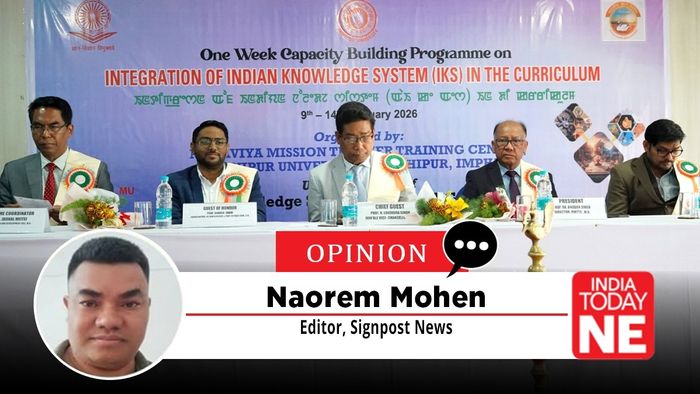
Inaugurated on February 9 and concluding till February 14, at Manipur University in Imphal, this week-long capacity-building initiative seeks to empower teachers and educators with the conceptual tools and pedagogical strategies needed to weave Indian Knowledge Systems (IKS) meaningfully into contemporary teaching and learning frameworks.
The initiative aims to deliver both theoretical insights—drawing from philosophy, science, ethics, and arts rooted in Indian traditions—and practical pedagogical tools. Participants will explore ways to incorporate IKS into classroom practices, curriculum design, and assessment methods, making education more relevant, inclusive, and transformative.
In a formal inaugural ceremony on February 9, the program brought together educators from across Manipur, reflecting a shared commitment to enriching the academic landscape. The event aligns closely with the National Education Policy (NEP) 2020, which calls for the integration of India's rich heritage of ancient and eternal knowledge into education to foster holistic, multidisciplinary, and culturally rooted learning.
This faculty development program is poised to spark meaningful academic dialogue, foster interdisciplinary collaboration, and inspire pedagogical innovation among participants. By equipping educators with the skills to integrate IKS, it contributes to the larger national goal of revitalizing India's knowledge traditions within modern frameworks, creating a more balanced and culturally resonant education system.
Chief Guest Prof. N. Lokendra Singh, Vice-Chancellor of Manipur University, delivered an inspiring address. He emphasized that IKS is essential for promoting holistic education—one that nurtures not just intellectual growth but also ethical, spiritual, and emotional development.
He urged higher education institutions to shoulder the responsibility of preserving and transmitting indigenous intellectual traditions alongside modern scientific disciplines, ensuring that students remain connected to their civilizational roots while engaging with global advancements.
Presiding over the session, Prof. R. K. Bhubon Singh, Director of the Malaviya Mission Teacher Training Centre (MMTTC) at Manipur University, highlighted the broader context of NEP-driven reforms. He noted that such capacity-building programs are vital for educators to adapt to evolving educational paradigms.
Integrating IKS, he argued, cultivates critical thinking, strengthens cultural rootedness, and encourages interdisciplinary approaches that bridge traditional wisdom with contemporary challenges.
Professor Aakash Shaw, the Course Coordinator for Indian Knowledge Systems, provided a detailed overview of the program's objectives and structure.
Among the distinguished resource persons, Dr. Chakradhar Meher from Central Sanskrit University offered scholarly perspectives on the civilizational dimensions of IKS. He stressed their enduring relevance in areas such as education, ethics, sustainable science, and societal harmony, highlighting how these systems provide timeless solutions to modern problems like environmental degradation and ethical dilemmas.
The event also featured active involvement from Prof. Ch. Ibohal Meitei, Program Coordinator at MMTTC, Manipur University, who played a pivotal role in organizing the program and ensuring smooth academic coordination.
This Capacity Building Program on weaving Indian Knowledge Systems (IKS) into Manipur's school and college curricula isn't just another boring teacher training, it's genuinely exciting and long overdue.
In the context of Manipur, the importance of integrating Indian Knowledge Systems, and more specifically, indigenous Manipuri knowledge traditions takes on profound local significance. Manipur is a treasure trove of unique cultural, linguistic, and intellectual heritage, shaped by diverse ethnic communities including the Meitei in the valley and various tribal groups in the hills.
The state's pre-colonial education system was deeply indigenous, community-based, and transmitted through oral traditions, rituals, and institutions that emphasized moral, social, and practical learning. Knowledge was not confined to texts but embedded in everyday practices, folklore, performing arts like Lai Haraoba, Pung Cholom, traditional healing, agriculture, and environmental stewardship.
For the Meitei community, which forms a major part of Manipur's population, indigenous knowledge systems encompass sophisticated traditions in areas such as folk medicine (practiced by Maibas and Maibis), astronomy aligned with agricultural cycles, ethical philosophies rooted in Sanamahism (the indigenous faith), and artistic expressions that integrate spirituality and community well-being.
In a state that has faced prolonged challenges, including ethnic tensions, environmental pressures from deforestation and climate change, and the erosion of cultural identities due to globalization and colonial legacies, integrating IKS into the curriculum offers a pathway to cultural revival and resilience.
NEP 2020's emphasis on decolonizing education resonates deeply here, as colonial education systems often marginalized local languages, oral histories, and traditional pedagogies in favor of Western models. By incorporating Manipuri-specific elements, such as indigenous medicinal plants, traditional water management systems, performing arts, and ethical governance drawn from historical Meitei chronicles, education can foster a stronger sense of pride, identity, and belonging among students.
Educators in Manipur stand to benefit immensely from this program. By gaining frameworks to blend IKS with modern subjects, linking Vedic mathematics to local computational traditions, Ayurveda-inspired wellness to indigenous folk medicine, or philosophy to Meitei ethical systems, they can make learning more engaging and relevant. Students exposed to such curricula are likely to develop critical thinking informed by cultural context, ethical leadership rooted in indigenous values, and innovative solutions to local challenges like sustainable development and health.
However, critics sometimes argue that prioritizing IKS risks diluting scientific rigor or promoting insularity. However, the program's approach, emphasizing integration rather than replacement counters this. IKS is positioned as complementary, enriching modern disciplines with historical depth and alternative perspectives.
The week-long program at Manipur University thus transcends a routine training exercise. It represents a deliberate effort to bridge past and present, local and national, tradition and innovation. In doing so, it empowers Manipur's educators to nurture future generations who are not only academically proficient but also culturally confident, ethically grounded, and equipped to contribute to both regional harmony and national progress.
As the sessions unfold through February 14, participants will engage in workshops, discussions, and practical exercises designed to translate IKS principles into actionable classroom strategies. The outcomes promise to ripple outward like enhanced teacher confidence, innovative curricula in schools and colleges across Manipur, and a renewed appreciation for the state's indigenous heritage.
In an increasingly homogenized world, initiatives like this affirm that true progress lies in honoring one's roots while embracing the future.
For Manipur, with its vibrant mosaic of traditions, from Meitei rituals to tribal ethnomedicine the integration of Indian Knowledge Systems is not merely educational reform; it is an act of cultural affirmation, resilience-building, and forward-looking empowerment.
This faculty program will quietly empower Manipuri teachers to safeguard our intellectual treasure, while adapting it boldly to modern needs. It's about cultural pride, mental resilience, decolonizing mindsets, and raising kids rooted yet globally ready.