Three years of unhealed wounds – A heart that still bleeds in Manipur
My hands tremble as I type this on May 3, 2026. Exactly three years ago, the first cries of violence tore through our land, and a part of my soul has remained shattered ever since. I stare again at the shared image – the cold headline reading 'Manipur Remains Divided Three Years After Deadly Ethnic Clashes'.
- May 03, 2026,
- Updated May 03, 2026, 12:09 PM IST
My hands tremble as I type this on May 3, 2026. Exactly three years ago, the first cries of violence tore through our land, and a part of my soul has remained shattered ever since. I stare again at the shared image – the cold headline reading “Manipur Remains Divided Three Years After Deadly Ethnic Clashes.”
Over 300 lives lost. 70,000 displaced into 178 camps. Villages turned to ash, temples destroyed, churches blackened, an entire generation carrying invisible scars. These are not mere statistics. They are mothers whose lullabies now end in sobs, fathers staring at empty thresholds, and children whose laughter was stolen too soon.
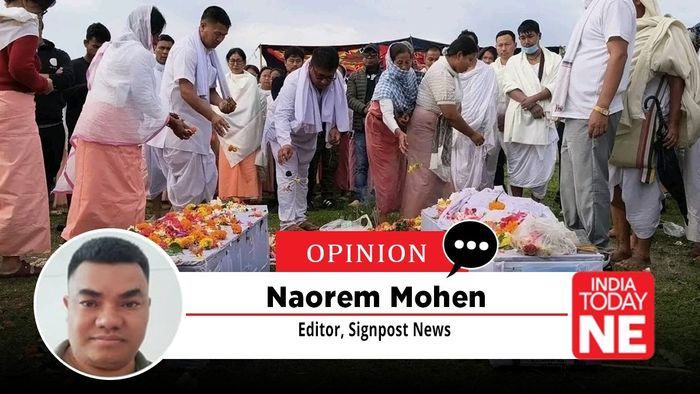
And yesterday – just yesterday – two more innocent souls were laid to rest in Tronglaobi. Two more lives extinguished in this endless cycle of pain. Two more families shattered, two more names added to the growing list of lives cut short while the rest of us mark anniversaries and scroll past headlines. Their deaths pierce the fragile calm like fresh wounds on old scars, reminding us that even as we speak of peace talks, the violence refuses to release its grip.
My chest tightens with a familiar ache. How many more must rest before we truly awaken?
The pain of yesterday’s tragedy in Tronglaobi merges with the collective trauma of the past three years. I close my eyes and see not abstract victims, but faces – perhaps a young farmer returning home, perhaps a mother shielding her child in Jiribam. Their final moments replay in my mind like a nightmare I cannot escape.
This is what three years have done to us, turned every new incident into a brutal echo of the original wound. Camps still overflow with displaced families. Trust has become the rarest currency in a land once known for its warmth and resilience.
Scrolling through social media today, my heart fractures anew. Kuki voices pour out “three years of systematic injustice,” recounting brutal killings, violence, and destroyed homes while demanding the world finally bear witness. Meitei voices remember the awakening, the attacks that changed everything, pleading for unity and decisive action against those who perpetuate fear.
Each post drips with sorrow, anger, and exhaustion. We are all bleeding from the same soil, yet we debate whose blood cries louder.
I walk through memories of a different Manipur – one where Meitei and Kuki children played together in paddy fields, where festivals blended our rhythms, where markets hummed with shared stories and laughter. That Manipur feels like a fading dream.
The rage I carry is not partisan. I am furious at Central leadership that allowed sparks to become infernos, at armed elements on all sides who chose violence over dialogue, at a system that measures success in political shifts rather than healed hearts. But deeper than rage is an ocean of sorrow – for the mothers who will never hug their children again, for the elders who die in camps far from ancestral homes, for the youth growing up knowing only suspicion and fear.
Three years. It feels like three lifetimes of waiting. Waiting for justice that crawls at a snail’s pace. Waiting for accountability that seems forever postponed. Waiting for the day when the checkpoints and curfews no longer define our days.
A new government brought a flicker of hope – peace talks in March 2026, the first direct conversations across the divide in years. However, sporadic violence still claims lives, turning our beloved land into an armed fortress where trust is the rarest commodity.
True reconciliation cannot emerge from separation or dominance. It demands we sit together in our pain. Manipur is not a peripheral problem. It is a test of India’s soul – whether we can embrace our diversity without letting it destroy us.
Three years on, Manipur remains divided. But division is not destiny. Healing will be slow, painful, and require leadership, forgiveness, and justice in equal measure.
I remain hopeful, not out of naivety but necessity. Manipur’s people are resilient. We have survived floods, blockades, bandhs, and insurgencies before. The younger generation, especially, shows glimmers of cross-community solidarity in some online spaces and quiet local initiatives.
Let this anniversary, marked by fresh sorrow, become the turning point. Let us cry together, remember together, and rise together.