"We Will Never Bow Down", Former CM Okram Ibobi Singh’s Message to Delhi
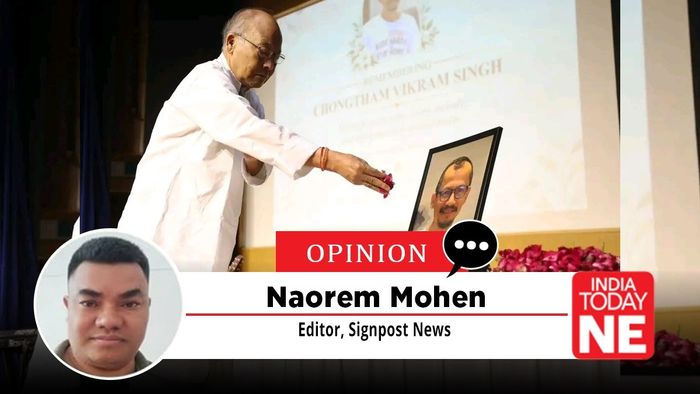
At a tribute for Chongtham Vikram Singh in New Delhi, former Manipur Chief Minister Okram Ibobi Singh seemed, for a moment, unable to find the words. Vikram was a musician known to people in Manipur and to many who had made Delhi their home.
- Sep 14, 2026,
- Updated Sep 14, 2026, 3:12 PM IST
At a tribute for Chongtham Vikram Singh in New Delhi, former Manipur Chief Minister Okram Ibobi Singh seemed, for a moment, unable to find the words. Vikram was a musician known to people in Manipur and to many who had made Delhi their home.
Okram Ibobi spoke of his family, his mother’s place in Manipuri music, and the pain of losing him. Then he said, “Remember, we the Manipuri never, never bow down to any people.” He ended with a promise: “We will never bow down till we get justice.”
That sentence could easily be taken out of the hall and turned into a political slogan. But the rest of Ibobi’s speech explained why he said it. He recalled being asked whether he was Nepali or Chinese when he travelled outside the Northeast.
When he answered that he was from Manipur, he had to explain where Manipur was and that it was part of India. It was an experience many people from the region would recognise. He was speaking at a tribute for a man who had lived and worked in the national capital, before an audience that needed to hear how belonging can still be questioned there.
The police have arrested seven men and apprehended a minor in connection with the assault that led to Vikram’s death. His family needs a thorough investigation, a fair trial and clear answers about what happened. The motive must be established through evidence. Ibobi’s account of discrimination should be heard seriously without treating it as a police finding about this particular attack.
What stayed with me was his willingness to say these things plainly in Delhi. Manipur needs leaders who can do that. Ibobi’s record as Chief Minister can be debated, and it should be. But he has shown, more than once, that he is prepared to confront powerful people at the Centre when he believes Manipur’s interests are at stake.
In 2010, NSCN-IM leader Thuingaleng Muivah planned to visit Somdal, his ancestral village in Manipur’s Ukhrul district. The proposal caused a confrontation between the state government and New Delhi. Ibobi opposed the visit, concerned that it could become a platform for demands affecting Manipur’s territorial integrity. The Union government at the time was led by the Congress, his own party. That did not make him yield.
In a later interview, Ibobi described the condition he had put to then Union Home Minister P. Chidambaram. He said he would consider Muivah’s visit if the NSCN-IM committed itself not to raise the issue of sovereignty and to respect Manipur’s territorial integrity. This was Ibobi’s account of their exchange, given years after the event. It remains a telling example of a Chief Minister willing to set out his position directly to a minister in Delhi.
A leader may take a firm position on territorial integrity and still be answerable for how the state treats those who oppose it. That is the test of political courage. It is easy to sound strong before people who already agree with you. It is harder to tell Delhi what you believe, listen to people at home who see the issue differently, and take responsibility when a confrontation carries a terrible human cost. Manipur needs all three from its leaders.
What was striking was that Ibobi did not wait for a party line from Delhi before speaking about Manipur.
Ibobi could tell his own party’s high command when he believed Delhi was wrong about Manipur. Can the BJP leaders governing the State today do the same? I have yet to hear a Manipur leader speak with that kind of candour at a public event in Delhi. They need not agree with Ibobi’s politics. But when Manipur’s interests are at stake, they should be able to look their national leaders in the eye and say what the people at home need them to hear.
At Vikram’s tribute, his words reached further back than either of those political disputes. Our forefathers fought the British in the Anglo-Manipur War of 1891. At Khongjom, Manipuri soldiers faced a force that was stronger and better armed. Paona Brajabashi and those who fought alongside him did not save the kingdom from defeat. They did leave succeeding generations an account of people who stood for their land when surrender would have been easier.
This history belongs in the story India tells about resistance to British rule. Manipur should not have to wait for a tragedy, or for a leader’s angry speech in Delhi, before the rest of the country remembers it.
The British Empire and present-day India are different. Ibobi’s words at the tribute need to be heard in the setting in which he spoke them: a Manipuri citizen demanding justice for another Manipuri citizen. He was reminding the capital that the people asking for justice have their own history, their own dignity and every right to be heard.
That reminder matters while Manipur is still struggling with violence, displacement and distrust. Leaders in the state must speak firmly to the Centre about security, rehabilitation and the ability of citizens to move freely. They must also speak with care to Manipur’s different communities. A forceful voice in Delhi carries more weight when people at home know their grief will be heard too.
Vikram Singh’s family will measure justice through the investigation and what follows it, not through the volume of speeches made in his name.
Former CM Ibobi gave voice to something many Manipuris felt at that tribute. Now the work is to keep asking for answers, to stand beside the family after the gathering has ended, and to show the same courage wherever power must be questioned.
(The views expressed in this article are those of the author and do not necessarily reflect the views of India Today NE or its affiliates)