When a Yaoshang Football Game Forced 150 Meitei IDPs to Flee, 19 Garhwal Rifles Rescued Them
Yaoshang, the festival of renewal and shared joy, brings communities together through colour, Thabal Chongba dances, and lively sports in Manipur. Yet on March 6, 2026, in Santhong Awang Leikai, Bishnupur district, a routine Yaoshang football match between Meitei IDP camp residents and the local community became a flashpoint of rejection.
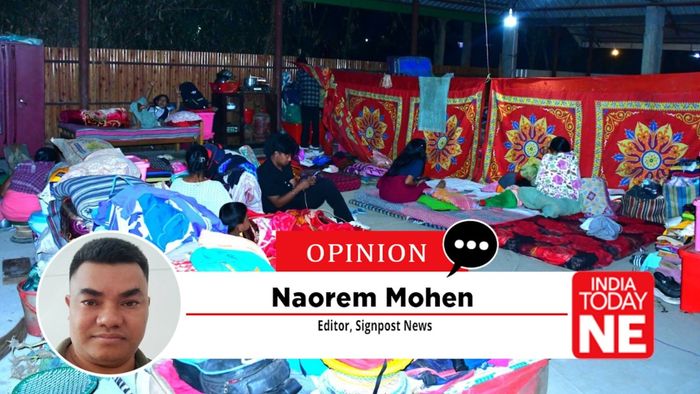
Naorem Mohen
- Mar 08, 2026,
- Updated Mar 08, 2026, 3:37 PM IST
Yaoshang, the festival of renewal and shared joy, brings communities together through colour, Thabal Chongba dances, and lively sports in Manipur. Yet on March 6, 2026, in Santhong Awang Leikai, Bishnupur district, a routine Yaoshang football match between Meitei IDP camp residents and the local community became a flashpoint of rejection.
By evening, 150 people from 38 families, internally displaced since the May 2023 ethnic violence were compelled to abandon the relief camps that had sheltered them for nearly three years. Carrying what little they could salvage, they walked to the 19 Garhwal Rifles camp in the Kangvai-Torbung area near Phougakchao Ikhai Thokchom Leikai Community Hall, Kumbi AC, turning to soldiers for the safety their own community could no longer provide.
These families, originally within the security zones—Phougakchao Ikhai, Torbung, Bangla had their homes burned and livelihoods destroyed in the 2023 Meitei–Kuki-Zo clashes that claimed over 300 lives and displaced more than 70,000. For almost three years they had depended on government shelters at Santhong Community Hall and a local school, living on intermittent aid while resettlement remained stalled by security concerns and slow rehabilitation.
The match started as a festive goodwill event. An IDP goal sparked cheers, then tension. Rough play led to fouls, injuries, and an on-field brawl. Spectators took sides instead of calming the situation; the local club lost control. Parts of the camp were damaged, twelve IDPs injured in the event.
Manipur police have to intervene to pacify both groups. Through direct engagement and crowd control they de-escalated the violence, restored order, and prevented further escalation or additional casualties beyond the initial dozen.
But no permanent resolution followed. Police addressed the locals’ main grievance by arranging for six young IDP players, some minors in classes 9 and 10 to offer public apologies to the locality in an effort to rebuild trust.
The apologies were duly offered, and for a brief moment the immediate tension appeared to subside. Yet the local community remained uncompromising. The six young players, would under no circumstances be allowed to return to the relief camp, although the rest of the IDPs might stay.
This decision created an impossible dilemma for the parents and families of the six boys. How could they remain in the camps, relying on the same local goodwill, when their own children were denied a safe and secure place to live?
What kind of logic separates a family in this way, forcing parents to choose between staying in the only shelter they have or leaving to be with their children? Where were these teenagers expected to go?
With no homes of their own since 2023 and no alternative accommodation provided, the boys had effectively been made homeless within their own community.
To enforce the locals’ condition and prevent any immediate renewal of conflict, the six boys were relocated to a location outside the village. This partial measure calmed the surface but left the deeper injustice unaddressed: a fractured family unit, displaced children without shelter, and a community decision that punished minors for a sports dispute while leaving their parents in limbo.
A tense meeting followed among local club representatives, Meira Paibi members, and IDP leaders in the evening. The displaced appealed for alternatives to preserve the fragile three-year coexistence sustained by local hospitality. Instead, ultimatums were issued that all IDPs must leave before March 22, 2026, since the village Lai Haraoba will start soon and the locals fear the same quarrel will occur during the ritual.
Rejected by their own after years of dependence, the 38 families gathered their remaining possessions, leaving behind much of the damaged government aid, and approached the 19 Garhwal Rifles late that evening.
The battalion responded immediately and without bias. Officers and jawans listened to the stories of rejection and renewed displacement, then provided urgent relief: tarpaulin shelters were set up, clean water and fresh cooked meals supplied for all 150 people, first aid administered to the injured, and round-the-clock security ensured.
In a region worn down by mistrust, this impartial aid delivered immediate safety and restored a measure of dignity. The 19 Garhwal Rifles had acted similarly weeks earlier. On February 13, 2026, over 200 Vaiphei IDPs fled intra-community unrest in Churachandpur town after a rally turned violent.
Feeling unsafe in their town camp amid rising frictions within Kuki and Zo subgroups, they deliberately sought the Kangvai block under the battalion’s protection. Exhausted arrivals after dark received hot meals, blankets, essentials, and the security that allowed rest.
This consistent pattern, impartial aid across ethnic lines, medical outreach, arms recovery, post-incident engagement has earned genuine trust in one of Manipur’s most volatile security zones.
The Yaoshang incident exposes a harsh truth. Prolonged displacement can fracture intra-community bonds. Resentment toward long-term camp residents as burdens turned a festival game into grounds for exclusion. A parallel dynamic drove Vaiphei families to army protection.
This pattern of IDP running away from their relief camps raises a troubling question: have the displaced become inconvenient reminders of unresolved trauma?
In a moment of profound helplessness, one of them, Thokchom Jiten (41), a homeless IDP who had become homeless once again on March 6, 2026, spoke on behalf of the group. With quiet desperation he requested protection and support from the jawans and officers, explaining their acute vulnerability near Kuki villages and the complete absence of any other safe alternative.
While much of Manipur celebrated Yaoshang with sports and unity, 150 Meitei IDPs became homeless once more, only to be rescued by soldiers who treated their suffering as human, not communal. The episode is a sobering reminder of the fragility beneath the festival’s surface and the urgent need for inclusive healing across Manipur’s divides.The district administration must not allow this incident to be quietly buried or downplayed.
Today, the IDPs were harassed, humiliated, and driven out by their own neighbours over a football match; tomorrow the same treatment can be repeated against any other displaced group, whether Meitei, Kuki, or any other, once they are viewed as unwanted guests, as rats to be shooed away rather than citizens deserving protection and dignity.
Transparency is the first step toward accountability. The administration should publicly acknowledge what happened in Santhong Awang Leikai on March 6, 2026, investigate the sequence of events impartially, ensure the safety and reintegration of these families, and send a clear message that no community has the right to expel fellow Manipuris from relief camps on such flimsy pretexts. Silence only normalises exclusion and invites repetition; speaking out can still prevent the next family from walking into the night with nowhere to go.
The 19 Garhwal Rifles’ impartial rescues, Vaiphei in February, Meitei in March, stand as a counterpoint, proving compassion can cross ethnic lines when civil mechanisms fall short.
MORE NEWS
Read more!