Why We Must Celebrate 200 Years of Manipur's Liberation and Recommit to Unity
Two hundred years ago, on February 24, 1826, the Treaty of Yandaboo was signed in a quiet Burmese town, yet its echoes still reverberate across Manipur.
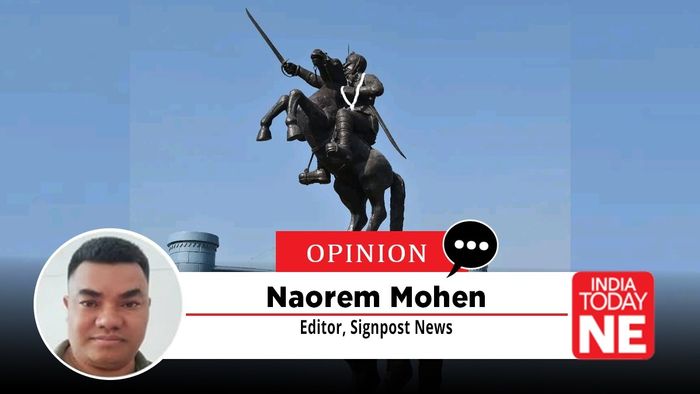
- Feb 27, 2026,
- Updated Feb 27, 2026, 1:24 PM IST
Two hundred years ago, on February 24, 1826, the Treaty of Yandaboo was signed in a quiet Burmese town, yet its echoes still reverberate across Manipur.
This significant agreement compelled the King of Ava (Burma) to renounce all claims over Manipur and formally recognise Chinglen Nongdrenkhomba, known to history as Gambhir Singh as the kingdom's rightful sovereign.
It brought an end to seven years of brutal occupation and devastation, remembered in Manipuri folklore as Chahi Taret Khuntakpa—the Seven Years Devastation (1819–1826). As Manipur observes this bicentenary on February 24, the treaty serves not merely as a historical milestone but as a profound, cautionary lesson.
Disunity among leaders, fuelled by selfish ambitions for power, can invite ruin on an unimaginable scale. Conversely, unity, strategic vision, and selfless patriotism can resurrect a people from the brink of extinction.
The prelude to 1819 was a tragedy of internal betrayal. Fierce rivalries among Manipur's royal princes, marked by palace intrigues, assassinations, and opportunistic alliances—shattered the kingdom's cohesion at its most vulnerable moment.
Without a professional standing army, modern weaponry, technological edge in warfare, or the economic reserves to sustain prolonged conflict, Manipur lay exposed to Burmese imperial ambition.
When Burmese forces invaded in 1819, the occupation descended into horror. Villages systematically burned, thousands slaughtered or dragged into slavery across distant lands, sacred temples and traditions desecrated, and the fertile Imphal Valley reduced to famine-stricken wasteland. Manipur hovered perilously close to erasure from the map.
From this abyss, however, emerged an inspiring story of resilience and redemption. Between 1819 and 1824, countless unsung patriots, ordinary villagers, exiled nobles, and guerrilla fighters waged relentless resistance, harassing Burmese garrisons and preserving the flame of defiance.
By 1824, Gambhir Singh, having endured exile, forged the Manipur Levy: a disciplined, homegrown force bolstered by his steadfast ally like Nara Singh and Herachandra. Through astute diplomacy amid the First Anglo-Burmese War (1824–1826), Gambhir Singh secured British training, arms, and tactical support, not as subservience, but as a calculated alliance against a mutual adversary.
The turning point came in 1825 when Burmese troops, stretched thin by the need to defend Lower Burma against British amphibious assaults, redeployed en masse from Manipur. Seizing the opportunity, the Levy launched a swift, decisive campaign, liberating the valley and forcing the Burmese to the negotiating table.
The Treaty of Yandaboo's Article 2 explicitly affirmed Gambhir Singh's independent rule, restoring Manipur's sovereignty and drawing a firm boundary against future aggression.
This victory was no geopolitical fluke. It was forged through sacrifice, tactical brilliance, and above all, unity under selfless leadership. Gambhir Singh transcended the role of monarch. His legacy, alongside the courage of the Manipur Levy and the early resistors, stands as irrefutable proof. When Manipuris stand together under honest, visionary guidance, no external power can hold them indefinitely.
As the bicentenary unfolds amid ongoing challenges, celebration must be tempered with unflinching introspection. The structural weaknesses of 1819, fragmented leadership, economic fragility, military unpreparedness, and over-reliance on external patrons have recurred with tragic regularity over the past two centuries.
Manipur has often found itself caught in cycles of dependency, uneven development, stark inequalities, and recurring ethnic tensions, lacking the sustained, inclusive leadership needed to break free.
On February 24 2026, these echoes are painfully audible. The ethnic violence that erupted on May 3, 2023, between the Meitei and Kuki communities has claimed over 300 lives, with more than 70,000 people displaced into relief camps or living in segregated zones enforced on informal ethnic lines. Communities remain largely separated, with trust eroded and daily life marked by mutual suspicion.
Sporadic flare-ups continues with arson and clashes in Ukhrul district and protests in Churachandpur. After N. Biren Singh's resignation in February 2025 amid internal BJP dissidence and the looming threat of a no-confidence motion, President's Rule was imposed. It was later lifted on February 4, 2026, with Yumnam Khemchand Singh sworn in as Chief Minister, supported by an inclusive arrangement: Deputy Chief Ministers Nemcha Kipgen (Kuki) and Losii Dikho (Naga).
These realities mirror 1819's failures of narrow ethnic or factional interests eclipsing collective welfare, communities retreating into silos instead of forging bridges, and excessive dependence on central interventions to fill internal voids. Power struggles, evident in the infighting that destabilised the previous regime risk perpetuating the cycle.
When leaders prioritise personal gain or community silos over shared security and progress, external exploitation becomes inevitable in this geopolitically sensitive border state.
The Meitei Alliance, unwavering in its commitment to a united, inclusive, and pluralistic Manipur built on mutual respect and fair development for all, calls on every citizen to reflect deeply on the bicentenary's profound dual lesson. They also urge everyone to joyfully celebrate the hard-won liberation secured through collective unity and extraordinary courage, while firmly rejecting the divisions, narrow self-interest, and disunity that once paved the way for catastrophe and suffering..
This bicentenary is far more than remembrance, it is a clarion call for transformation. Honour the patriots of Chahi Taret Khuntakpa by resolving never to repeat their tragic errors. Build governance with the discipline and resolve of the Manipur Levy, an economy robust enough to thrive independently, and leadership that unites rather than divides.
The prolonged political instability gripping Manipur has been exacerbated by internal rebellions and dissidence within the BJP, including multiple rebel MLAs demanding leadership changes, contributing to government paralysis, the resignation of the former Chief Minister, imposition of President's Rule, and delayed expansion of ministries under new CM, further deepening ethnic divides and hindering progress toward peace.
Only through unbreakable solidarity can Manipur reclaim its full dignity, achieve lasting prosperity, and secure true freedom in spirit, not as a fragile restoration, but as an enduring, self-sustained reality.
The Treaty of Yandaboo gave back sovereignty once. Let its 200th anniversary inspire Manipuris to safeguard and deepen it forever, through their own collective resolve, hard work, and unyielding unity.