Why a Cricket Jersey Blunder Would Spark Revolution, But Football's Fiasco Gets a Shoulder Shrug
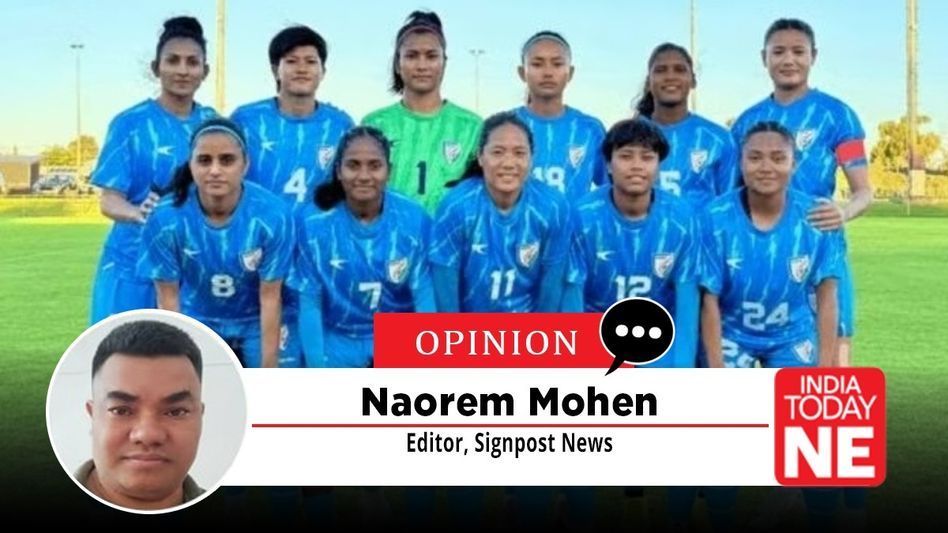
The Indian women's national football team, currently in Australia for the AFC Women's Asian Cup 2026, encountered a major logistical embarrassment when the jerseys dispatched by the All India Football Federation (AIFF) proved to be undersized and unsuitable for the senior squad.

- Mar 06, 2026,
- Updated Mar 06, 2026, 2:25 PM IST

The Indian women's national football team, currently in Australia for the AFC Women's Asian Cup 2026, encountered a major logistical embarrassment when the jerseys dispatched by the All India Football Federation (AIFF) proved to be undersized and unsuitable for the senior squad.
These kits, apparently manufactured for age-group or junior teams (with sizes seemingly intended for Under-15 or smaller athletes), did not fit at least 80% of the 26-member group, including several players and even the coaching staff.
The issue came to light just two days before their crucial Group C opener against Vietnam in Perth, when the cargo finally arrived at the team hotel, turning what should have been final tactical preparations into a frantic scramble for alternatives. This forced a chaotic last-minute procurement of plain, sponsor-less kits from a local European brand (Macron).
The details of the incident paint a picture of systemic failure. Days before the Group C opener against Vietnam in Perth on March 4, 2026, the Blue Tigress team received kits shipped from India.
These jerseys were so ill-fitting that they suited perhaps only 20% of the players, with many appearing designed for youth or age-group teams. Even coaching staff kits were wrong. Senior players, including Sweety Devi and Grace Dangmei, signed a formal letter to AIFF Deputy Secretary-General Satyanarayan Muthyalu, voicing frustration that the "arrival of incorrect match kits at this crucial stage has further affected morale and disrupted our focus."
The strongly worded statement highlighted the cumulative challenges: “Over the past days, players and staff have already faced challenges due to the lack of appropriate clothing during preparation,” it read. “The arrival of incorrect match kits at this crucial stage has further affected morale and disrupted our focus in the final days leading up to the match. Representing India on the international stage requires professional standards, including properly fitted and appropriate match and training apparel.”
Despite the setback, they reaffirmed their dedication: “We remain fully committed to representing our country with pride and giving our best performance.”
The AIFF acted to avert further embarrassment, sourcing 55 replacement jerseys (two sets: light blue and red) locally from the Italian brand Macron, which had stock available in Perth. An AIFF senior official acknowledged the problem, stating, “We were told there is a problem with the jerseys since they were not fitting properly and we addressed the issue,” while noting that the national team currently lacks a dedicated kit partner.
The new kits, complete with names and numbers, were made available a day before the match, and the Asian Football Confederation (AFC) granted approval. The replacements ensured the team could take the field without sponsor logos but in proper attire.
This fiasco led to an undeniable psychological toll right before a match that ended in a 2-1 defeat, sealed by a stoppage-time goal in the 90+4th minute.
Also Read: The True Story of NH-202’s Endless Delays in Manipur
Imagine the identical scenario hitting the Indian men's cricket team, the Men in Blue on the eve of a World Cup or marquee Test series opener: jerseys arrive ill-fitting or mismatched, compelling stars like Shubman Gill or Rohit Sharma to scramble for alternatives hours before the first ball.
The fallout would be seismic: hashtag trending nationwide, viral memes, sponsor ultimatums, wall-to-wall TV debates, editorials decrying national embarrassment, and swift demands for audits or resignations.
Cricket's ecosystem, fueled by the world's richest board (BCCI), billions in revenue, and intense public scrutiny, tolerates zero such amateurism. Even minor apparel issues trigger rapid, high-level responses.
Real historical examples from cricket illustrate this intolerance for mismanagement or protocol slips, contrasting sharply with football's normalized chaos.
In 2017, Indian players voiced strong dissatisfaction with sub-standard Nike kits, citing poor fabric quality and overall inadequacy. The complaints reached BCCI CEO Rahul Johri and General Manager Ratnakar Shetty, who escalated them to the Supreme Court-appointed Committee of Administrators (COA).
COA chairman Vinod Rai took the matter "very strongly," declaring that the team could not have sub-standard kits. A meeting with Nike was promptly scheduled, and the brand responded by supplying new practice kits to players soon after. No excuses, no scrambling, the issue received structured intervention at the highest levels because even kit quality for the national side demands immediate accountability.
More recently, in July 2025, during the second Test against England at Edgbaston (Birmingham), Shubman Gill, then India's Test captain was spotted wearing a black Nike vest (as innerwear) while declaring the innings on Day 4/5.
This sparked immediate viral controversy because the BCCI holds an exclusive apparel sponsorship deal with Adidas (signed in 2023, valued at around ₹250 crore annually, running until March 2028), granting Adidas sole rights for match-day kits, training wear, travel apparel, and related merchandise across all teams.
Nike, a direct competitor, appearing visibly during an official moment raised questions of potential breach of brand exclusivity and contractual obligations.The incident exploded online, with fans, media, and commentators debated violations, sponsorship protocols, and precedents (like Sourav Ganguly's mid-2000s Puma headband fine under Nike's sponsorship).
TV Headlines questioned if Gill or the BCCI faced trouble, with some speculating on fines or legal scrutiny. While reports noted the Adidas deal likely excluded innerwear explicitly, the optics alone fueled widespread scrutiny, proving that even a seemingly trivial visible rival brand during a high-profile Test draws massive backlash, memes, and commercial implications.
No official action against Gill was confirmed in most coverage, but the episode highlighted cricket's zero-tolerance culture, like rapid amplification and enforcement debates over apparel protocol.
These cases show how cricket treats kit-related issues with urgency, player feedback escalates to COA-level intervention, minor branding slips ignite national debates, because the sport's massive stakes demand perfection.
In stark contrast, the AIFF's repeated failures, like the 2022 U-17 World Cup boots arriving late, barely ripple beyond football niches. The women's team, with its resilient Northeast core (nine from Manipur: goalkeeper Elangbam Panthoi Chanu, Sweety Devi, Grace Dangmei, Shilky Devi Hemam, Sarita Yumnam, Martina Thokchom, Phanjoubam Nirmala Devi, Lynda Kom Serto, Babina Devi Lisham; plus Sanfida Nongrum from Meghalaya), prepared intensely in Türkiye and Australia for a genuine shot at 2027 FIFA Women's World Cup qualification.
However, basic kit logistics collapsed, diverting mental energy from strategy to wardrobe crises in the final 48 hours.
Psychology in elite sport is crucial. Ill-fitting, mismatched, logo-less kits undermine confidence, team identity, and unity, subtly eroding the composure needed for tight margins. India's performance against Vietnam was gritty, trailing 1-0 at halftime but equalizing via Nongrum in the 52nd minute before the late concession showing quality despite adversity.
But the preceding distraction likely left faint cracks in focus when it mattered most.This isn't excusing the result, Vietnam earned victory. It's exposing hypocrisy where cricket's resources enforce elite standards, while women's football scrapes by, undervalued in a cricket-obsessed nation.
Talents from states like Manipur shine despite systemic hurdles, not because of support.
If cricket endured even a sliver of this fiasco, revolution would follow accountability enforced overnight. For the Blue Tigresses, it's shrugs. The 150 crore must change that and amplify these athletes, demand AIFF match cricket-level professionalism, and end the neglect sabotaging national progress.
The revolution cricket would unleash over a jersey blunder reveals skewed priorities. Until football receives equivalent scrutiny and backing, these trailblazers will keep battling administrative obstacles instead of thriving unhindered. The shrug must end, real support must begin.