Imagi Meira's Thokchom Sujata Calls for Protective Laws as Census Tensions Rise in Manipur
The 2026 Census in Manipur is far more than a routine headcount, it is a critical juncture that could either reinforce or irreversibly undermine the demographic integrity, political representation, resource allocation, and cultural continuity of the state's indigenous communities.
- Mar 13, 2026,
- Updated Mar 13, 2026, 3:23 PM IST
The 2026 Census in Manipur is far more than a routine headcount, it is a critical juncture that could either reinforce or irreversibly undermine the demographic integrity, political representation, resource allocation, and cultural continuity of the state's indigenous communities.
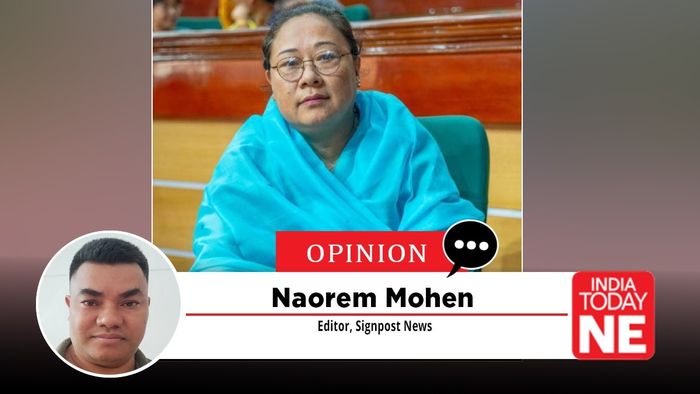
Thokchom Sujata, President of Imagi Meira, a prominent women's organization dedicated to defending indigenous rights, land, and identity of Manipur, has emerged as a steadfast voice against unchecked demographic changes. She has cautioned that conducting the Census without rigorous verification risks legitimizing fraudulent influxes and historical distortions, thereby threatening the very foundation of indigenous representation and security.
Her current demand is precise and urgent: the ongoing 7th Session of the 12th Manipur Legislative Assembly must introduce and pass dedicated protective legislation to legally mandate that no Census operations, house-listing or full enumeration, proceed without prior citizenship verification, rectification of historical errors, and safeguards against influx-related distortions.
Channeling Imagi Meira's persistent advocacy, she dismisses mere procedural assurances, short-term delays, or non-binding resolutions as wholly inadequate.
The current Assembly Session remains procedural opportunity for urgent legislative steps. Sujata insists MLAs must act decisively to enact binding law that compels safeguards, rather than relying on advisory measures that can be ignored.
This is the right time for the Assembly to exercise its constitutional authority under Article 246 of the Constitution of India, which delineates the distribution of legislative powers through the Seventh Schedule.
While Census itself falls under Entry 69 of the Union List (giving Parliament exclusive power over the subject), and the National Register of Citizens (NRC) and Special Intensive Revision (SIR) of electoral rolls are managed by central bodies like the Registrar General of India and the Election Commission of India, the state legislature retains significant scope to act.
Under Article 246(3), the state has exclusive power over matters in the State List (List II), including public order, police, land rights, public health, and local administration, areas directly impacted by demographic changes and influx.
Manipur can therefore legislate to protect its people, create complementary mechanisms (such as a state-level verification register or deferral framework), and address local vulnerabilities without conflicting with central authority. Such state legislation is essential precisely because central exercises like Census, NRC, and SIR operate at a national level and may not adequately account for Manipur's unique border threats, ethnic dynamics, and historical anomalies.
Sujata endorses that such protective legislation would establish enforceable mechanisms by requiring pre-Census implementation of an NRC-like register, drawing from Assam's Supreme Court-supervised model (2013–2019), with a suitable cut-off date (e.g., 1951 or 1961), mandatory legacy documents and family proofs, local verification committees, and tribunals for appeals and exclusions.
Also Read: Why MP Sanajaoba’s Call for Immigration Cleanup Before Census Is More Relevant Than Ever
The protective legislation can also serve as a powerful legal instrument to empower the state with the authority to defer Census activities, until verification is certified and complete, overriding standard central schedules; incorporating provisions to audit and correct anomalies from the deeply flawed 2001 Census, avoiding perpetuation of distorted baselines; prioritizing safeguards for IDPs displaced by ethnic violence, ensuring their genuine enumeration and resettlement before outsiders fill enumeration gaps; and adding border-specific provisions to address Manipur's unique vulnerabilities due to proximity to Myanmar and persistent concerns over undocumented migration.
This push arises from the enduring damage of the 2001 Census blunder. Provisional data showed implausible decadal growth—169% to 267%—in hill sub-divisions like Tengnoupal, Churachandpur, Senapati, Mao-Maram, Paomata, and Purul, defying natural patterns without massive external influx. Partial revisions by the Registrar General of India (e.g., some sub-divisions reduced to ~39%) and Gauhati High Court deletions of over 2.23 lakh dubious entries addressed only fragments of the problem; inconsistencies lingered, skewing delimitation, resources, and representation for over two decades. A 2026 Census without safeguards would amplify this failure exponentially.
As reported in The Sangai Express on March 12, 2026, Chief Minister Y Khemchand Singh stated that the Census exercise in Manipur will take some time, as the Special Intensive Revision (SIR) of electoral rolls and house-listing must be completed first. He noted that the government has communicated with the Election Commission of India (ECI) regarding the Census, reiterating that SIR and house-listing will precede the population count.
The news report also highlighted that in response to a motion and queries raised by CLP leader K Meghachandra Singh, the Chief Minister acknowledged the suggestion to commence the Census only after all internally displaced persons (IDPs) are resettled, taking note of the concerns about demographic accuracy amid displacement of people.
However, Thokchom Sujata strongly objected to the media report, saying the statements from the Chief Minister are misleading the people of Manipur, plain and simple. He is presenting SIR as some kind of substantial safeguard or precursor that will magically resolve our demographic concerns before the Census begins. But let's be clear: SIR is an Election Commission exercise, exclusively for cleaning and updating electoral rolls—voter lists—for electoral purposes only.
It is very far removed from a comprehensive Census or a citizenship verification like the NRC. SIR focuses on verifying electors' details, such as place of birth, residence, and qualifications to vote. It may identify some duplicates, deletions, or inclusions in voter lists, and in places like Bihar, it has led to removals and additions of names.
But it does not—and cannot—determine citizenship status, trace origins beyond electoral eligibility, or address the broader issue of undocumented influx that plagues Manipur. It lacks the depth, documentation requirements, and legal framework of an NRC, which uses legacy data, cut-off dates, tribunals, and proof of pre-cut-off residence to exclude non-citizens.
Sujata also concluded, "By announcing Census will take some time after SIR and house-listing, CM Khemchand wants to buys time but sidesteps the core issue."
Exactly, the Special Intensive Revision (SIR), governed by the Representation of the People Act, focuses narrowly on voter-list purification: eligibility verification via forms, Booth Level Officers, and checks for duplicates or deletions. It offers no citizenship adjudication, no historical legacy tracing, family linkages, exclusion tribunals, or removal of non-citizens from population totals.
In Manipur's broader residency and infiltration context, SIR cannot substitute for proper verification; presenting it as sufficient preparatory work misleads while sidestepping the fundamental demand for verified citizenship.CSOs like CSO Kangleipak (CSK), Just Fair Delimitation (JFD), Ima Lup, United Committee Manipur (UCM), DESAM, and others have repeatedly critiqued SIR's limitations.
This discontent fueled violent protests on March 11, 2026, at Khwairamband (Ima Keithel) Market in Imphal, organized by JFD and allies, where hundreds chanted “No NRC, No Census,” attempted to march toward the Assembly, clashed with forces, and suffering six protestors due to tear-gas injuries.
These events, occurring amid the Assembly's budget deliberations, reflect widespread public outrage and highlight the urgency for legislative action.The Assam NRC model (2013–2019) provides a workable template: 1951 base, 1971 cut-off per Assam Accord, document-based proofs, tribunals for exclusions.
Manipur could adapt it via state-level legislation, a register with tailored cut-off, mandatory proofs, local structures, and border safeguards, enabling boundary freezes during verification and central coordination requests.
Even if full passage stretches beyond this Assembly session, tabling the protection legislation bill would create momentum and accountability.
Without such legislation, alleged fraudulent influx would inflate numbers, shift power, redraw constituencies unfavorably, and marginalise indigenous voices in future assemblies and Parliament. Resources and rights would skew toward non-natives; entrenching erasure of the indigenous rights.
These demands stem from survival, not self-interest, though MLAs benefit most: fair counts protect constituencies and political futures. They must lead, not evade public voices.Thokchom Sujata's undying spirit, rooted in defending Manipur's mothers, daughters, land, and identity, reflects collective will.
The Assembly's historic test is here: introduce protective legislation now. Verify citizenship before counting. Defer if needed. Inaction invites judgment; courage today secures Manipur's indigenous tomorrow.