Why the Army Remains Our Only Hope for Lasting Peace in Manipur?
Despite numerous memoranda and heartfelt pleas from concerned citizens across Manipur urging decisive action to dismantle the misuse of unofficial buffer zones—which continue to obstruct resettlement efforts and indefinitely prolong the acute suffering of thousands of Internally Displaced Persons—the administration under President's Rule has regrettably failed to seriously confront those hostile civil society organisations aggressively pursuing a separatist agenda.
- Dec 24, 2025,
- Updated Dec 24, 2025, 6:50 PM IST
Despite numerous memoranda and heartfelt pleas from concerned citizens across Manipur urging decisive action to dismantle the misuse of unofficial buffer zones—which continue to obstruct resettlement efforts and indefinitely prolong the acute suffering of thousands of Internally Displaced Persons—the administration under President's Rule has regrettably failed to seriously confront those hostile civil society organisations aggressively pursuing a separatist agenda.
This persistent inaction not only perpetuates humanitarian hardship but actively emboldens escalating demands for outright separation and the entrenchment of internal buffer zones—arrangements that remain utterly unprecedented within the boundaries of any single Indian state.
If such demands for a separate administration or full Union Territory status were ever accepted as justified responses to ethnic clashes in Manipur, the precedent would unleash chaos across the nation: India, having endured hundreds of communal and ethnic conflicts since independence, could potentially splinter into dozens of fragmented entities, undermining the very foundation of our unified sovereign republic.
As Manipur solemnly observes Christmas Eve 2025 amid its third harrowing year of ethnic violence sparked in May 2023, unofficial buffer zones have hardened into unprecedented de facto separations between the Kuki and Meitei communities, carving invisible yet impenetrable barriers across the state's landscape.
Despite the imposition of President's Rule in February 2025—following the resignation of Chief Minister N. Biren Singh on February 9—and repeated extensions to inquiry commissions probing the roots of the unrest, intermittent outbreaks of violence, resurgent militant activities, deeply entrenched mistrust, and increasingly partisan civil society organisations continue unabated.
Politicians, often paralysed by credible armed threats, and CSOs perceived as biased along ethnic lines have proven incapable of bridging divides or uniting the fractured populace.Certain Kuki-Zo CSOs, notably the Kuki Human Rights Council and Kuki Zo Council, persist in vocally demanding a separate administration—frequently articulated as a Union Territory equipped with legislative powers—citing supposedly irreparable divides.
These demands manifest concretely through sustained blockades that severely disrupt Meitei movement along vital National Highways, hinder resettlement initiatives, and choke critical trade corridors such as Moreh, a lifeline for Indo-Myanmar relations and indispensable to national security interests.
When elected political leadership and the state machinery demonstrably fail to rein in such hostile and divisive advocacy—fuelled by longstanding grievances including illegal immigration, narco-terrorism linkages, and unchecked encroachments on reserved forest lands—the Indian Army emerges unmistakably as the sole impartial, professionally disciplined force equipped to restore order, enforce the rule of law, and genuinely foster pathways toward reconciliation.
The Kuki versus Meitei conflict stands uniquely apart in post-independence India: no major communal or ethnic riot—be it the 1984 anti-Sikh pogroms in Delhi, the 1992-93 Mumbai riots, the 2002 Gujarat violence, the 2013 Muzaffarnagar clashes, or even the brutal 1990s Naga-Kuki clashes that claimed over 1,000 lives and displaced 100,000—has ever culminated in sustained, organised demands for territorial division or a separate administration.
Those earlier crises, painful as they were, ultimately channelled public outrage into calls for justice, accountability, rehabilitation, official inquiries, and resettlement within the existing constitutional framework, without resorting to fragmentation of the state.
Standing sentinel on the frontlines day after day, our Indian Army—through its intelligence networks, ground-level interactions, and operational experience—undoubtedly possesses deep insight into why this particular ethnic clash between the Kuki and Meitei communities has been manipulated to fuel unprecedented demands for a separate administration or Union Territory status, demands that no other aggrieved ethnic community in India's long history of conflicts has ever pursued to this extent.
Whether driven by domestic agitators, deep-state machinations, or external foreign hands seeking to destabilise a strategically vital border state, the Army's institutional knowledge of these underlying forces positions it uniquely to dismantle such threats and guide Manipur toward genuine, undivided reconciliation.
Moreover, Manipur's ongoing crisis has festered dangerously amid a troubling national silence on critical flashpoints: the solidification of unofficial buffer zones, artificially imposed majority-minority dynamics, rampant poppy cultivation fuelling narco-terrorism, and unchecked illegal immigration across porous borders.
Compounding this distress is overt support from certain external states and groups for outright division—a development that poses a grave strategic vulnerability for India, with porous borders enabling foreign influences, narcotics networks arming militants, and the ever-present risk of contagion spilling over into adjacent states.
In this perilous vacuum of ineffective governance, the Indian Army's decisive and unwavering leadership—comprising personnel drawn from every corner of the nation, unbound by local ethnic affiliations, and commanded by officers rigorously honed through highly competitive examinations and trainings—provides indispensable expertise in strategic planning, crisis resolution, and fostering enduring national cohesion.
Throughout 2025, intensive joint operations involving the Assam Rifles, Manipur Police, CRPF, Indian Army, and BSF have delivered tangible, measurable results: numerous arrests of militants across both valley and hill districts, substantial seizures of weapon caches targeting revanchist groups, and a marked curbing of chaotic disruptions.
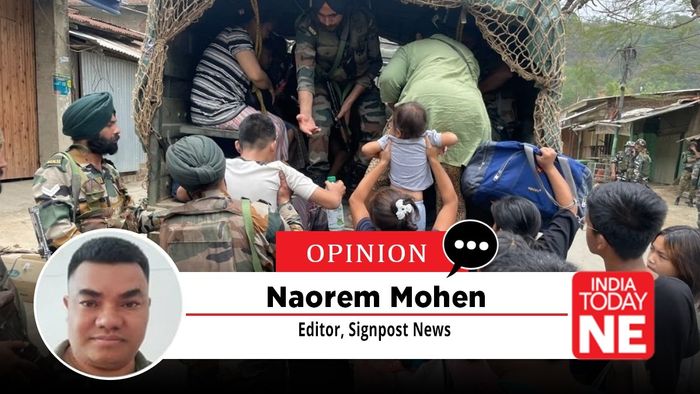
Yet the Army's contributions extend far beyond mere law enforcement; they encompass profound humanitarian and proactive peace-building initiatives that reaffirm its unwavering commitment to the welfare of all Manipuris, irrespective of community.
A shining exemplar of this impartial dedication occurred in August 2023, when the Army, in close coordination with Assam Rifles, orchestrated the safe repatriation of 212 Meitei citizens—including 89 women and 37 children—who had fled across the Myanmar border amid the initial mayhem in Moreh.
This mission under the GOC Eastern Command Lt Gen. RP Kalita, GOC 3 Corps Lt Gen. HS Sahi, and CO of 5 Assam Rifles Col. Rahul Jain not only reunited shattered families but vividly exemplified the Army's steadfast dedication to safeguarding vulnerable citizens across ethnic lines.
Similarly, in January 2024, as tensions escalated dramatically in the border town of Moreh—with direct attacks on security forces—the Director General of Assam Rifles, Lieutenant General Pradeep Chandran Nair, made a personal visit to engage frontline realities. He held direct, meaningful dialogues with leaders from an array of diverse communities, including the Hill Tribe Council, Kuki Students' Organisation, Kuki Women’s Union, Human Rights Moreh, Kuki Inpi Tengnoupal, Tamil Sangam, Gorkha Samaj Samiti, and Manipur Muslims Council.
Assuring impartial analysis of all grievances, he particularly urged Moreh's residents—especially women—to actively contribute to peace restoration. While issuing stern warnings to armed elements of appropriate retaliation if provoked, he emphasised that peace is a shared interest and collective responsibility.
Also Read: ITLF Should Listen to Displaced Kuki-Zo Before Alleging Against Meitei IDPs
Such initiatives powerfully illustrate the Army's nuanced approach: unyielding firmness balanced with genuine empathy to rebuild harmony in cosmopolitan hubs like Moreh.
Recently, in a powerful display of outreach and confidence-building, soldiers from the 19th Battalion, Garhwal Rifles, swiftly met with panicked Meitei villagers in Torbung shortly after a Kuki militant attack. This engagement came within 24 hours of the villagers' long-awaited resettlement—following nearly 31 months of displacement—reassuring the community, restoring a vital sense of security, and fostering the gradual return of normalcy in the area.
Had there been no timely and robust intervention by the Indian Army at the very outset of the violence in May 2023—amid clear evidence of foreign hands, deployment of sophisticated weapons, and highly coordinated attacks targeting innocent villagers—the human toll would have been catastrophically unfathomable, potentially surging into the thousands and etching the most heinous and devastating ethnic conflict in post-independence India's history.
The Army's swift, impartial evacuations of civilians from both Kuki-Zo and Meitei areas played an absolutely critical role in minimising early loss of life, underscoring its indispensable position not merely in restoring immediate order but in spearheading comprehensive, long-term peace-building efforts across the state.
We take rightful pride in the Indian Army's illustrious, proven track record of intervening decisively to quell major communal and ethnic strife in the past, repeatedly restoring order where local police forces faltered due to perceived bias or debilitating delays.
In the 1992-93 Mumbai riots, marred by allegations of police inaction and complicity, the deployment of Army troops for flag marches and area patrols proved instrumental in swiftly bringing the spiralling chaos under control. Similarly, during the 2002 Gujarat riots, despite initial logistical hurdles, Lieutenant General Zameer Uddin Shah's forces implemented firm, decisive measures that rapidly curtailed the widespread violence once fully mobilised. In the 1984 anti-Sikh violence in Delhi, the Army's delayed yet eventual deployment—armed with shoot-on-sight orders in heavily affected zones—ultimately helped stem the tide of organised pogroms.
Given this rich history of precise, effective crisis management in even the most volatile ethnic and communal conflicts, the stubborn persistence of deep-seated animosity between the Kuki-Zo and Meitei communities in Manipur compels serious introspection. What unseen constraints—be they political, logistical, or operational—have limited the security forces' ability to more comprehensively neutralise entrenched anti-national elements and hostile actors?
If granted expanded operational autonomy and unequivocal political backing, the Indian Army could markedly expedite the restoration of lasting peace in this profoundly fractured state. Demands for perpetuating buffer zones, establishing separate administration, or carving out Union Territory status—each carrying the inherent risk of irreversible division—could be addressed with the firm, disciplined authority that the Army uniquely commands, particularly in contexts where political processes and state police have grappled with maintaining unquestioned impartiality.
True, enduring peace in Manipur necessitates inclusive, multi-stakeholder dialogue, rigorously impartial governance, and collective healing efforts—emphatically not further territorial fragmentation that would only deepen wounds.
As the ultimate guardian of our constitutional sovereignty, constitutionally duty-bound to counter anti-national activities while scrupulously upholding fundamental rights, the Indian Army stands as the most dependable, professional force capable of healing this fractured state when politicians, state machinery, and partisan CSOs have collectively faltered.